At a Glance: AMD Care at Chetna Hospital
- Specialist: Dr. Rachana Tiwari Patil (MS Ophthalmology).
- Location: Chinchwad, Pune (Serving 5km radius: Akurdi, Nigdi, Thergaon, Ravet).
- Key Treatments: Anti-VEGF Injections, Laser Therapy, and Low Vision Aids.
- Symptoms: Blurred central vision, distorted lines, difficulty recognizing faces.
Introduction: When Vision Fades Quietly
There’s a peculiar cruelty to Age-Related Macular Degeneration (AMD)—it doesn’t strike with darkness, but with distortion. A face becomes unfamiliar. Words blur mid-sentence. Straight lines ripple like heat waves on asphalt.
For many individuals over 50, especially for seniors in Pimpri-Chinchwad (PCMC) and nearby areas like Akurdi and Nigdi, where awareness remains uneven, AMD emerges not as a crisis but as a slow unraveling. And yet, here’s the paradox—caught early, its impact can be softened, sometimes dramatically.
This guide moves beyond textbook explanations. It walks you through why AMD happens, how to recognize it before it tightens its grip, and what modern medicine—guided by specialists like Dr. Rachana Tiwari-Patil—can realistically offer.
What is AMD? (And Why It Targets Central Vision)
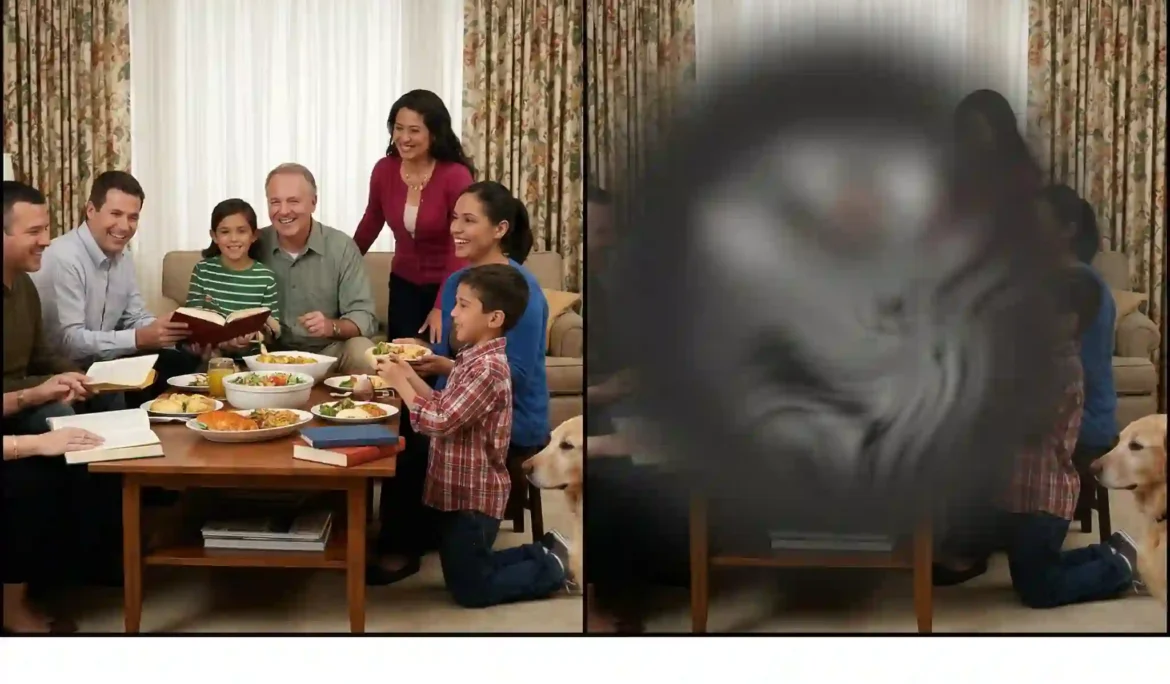
AMD is a degenerative condition affecting the macula, the central portion of the retina responsible for sharp, detailed vision.
Think of the retina as a camera sensor—and the macula as its highest-resolution zone. When this area deteriorates, clarity collapses, even if side vision remains intact.
Two Faces of AMD
| Feature | Dry AMD | Wet AMD |
| Progression | Slow (Years) | Rapid (Weeks/Months) |
| Main Cause | Drusen (waste) deposits | Abnormal blood vessel growth |
| Severity | Gradual vision thinning | Suddenly, severe vision loss |
| Treatment | Antioxidants & Lifestyle | Anti-VEGF Injections / Lasers |
Why does age-related macular degeneration develop? (Beyond Just Aging)
Aging may open the door—but it doesn’t act alone.
Biological Triggers
- Weakening of the Retinal Pigment Epithelium (RPE)
- Accumulation of drusen (waste deposits under the retina)
- Reduced oxygen and nutrient exchange
Lifestyle & Health Risk Factors
- Smoking (increases risk up to 3–4 times)
- High blood pressure
- Diabetes and high cholesterol
- Poor antioxidant intake
- Family history of retinal disease
Indian Context Insight
Studies suggest that urban Indian populations show rising AMD prevalence, largely due to lifestyle shifts—processed diets, screen exposure, and vascular diseases.
Early Symptoms Most People Miss
AMD rarely announces itself loudly at first. Instead, it whispers.
Watch for:
- Blurred or hazy central vision
- Straight lines appearing bent or wavy
- Difficulty reading in dim lighting
- Colors appear faded or washed out
- Dark or empty spots in the center of vision
Real Patient Scenario
A 58-year-old patient at Chetna Hospital reported “difficulty reading WhatsApp messages.” No pain. No redness. Just mild distortion. Diagnosis? Early AMD. Intervention at this stage preserved functional vision.
Stages of age-related macular degeneration: How It Progresses
| Stage | What Happens | Symptoms |
|---|---|---|
| Early | Small drusen form | No noticeable vision loss |
| Intermediate | Larger deposits | Mild distortion, low-light difficulty |
| Advanced | Macular damage | Significant central vision loss |
Special Mention: Geographic Atrophy
An advanced form of dry AMD where retinal cells gradually perish—like a fading photograph.
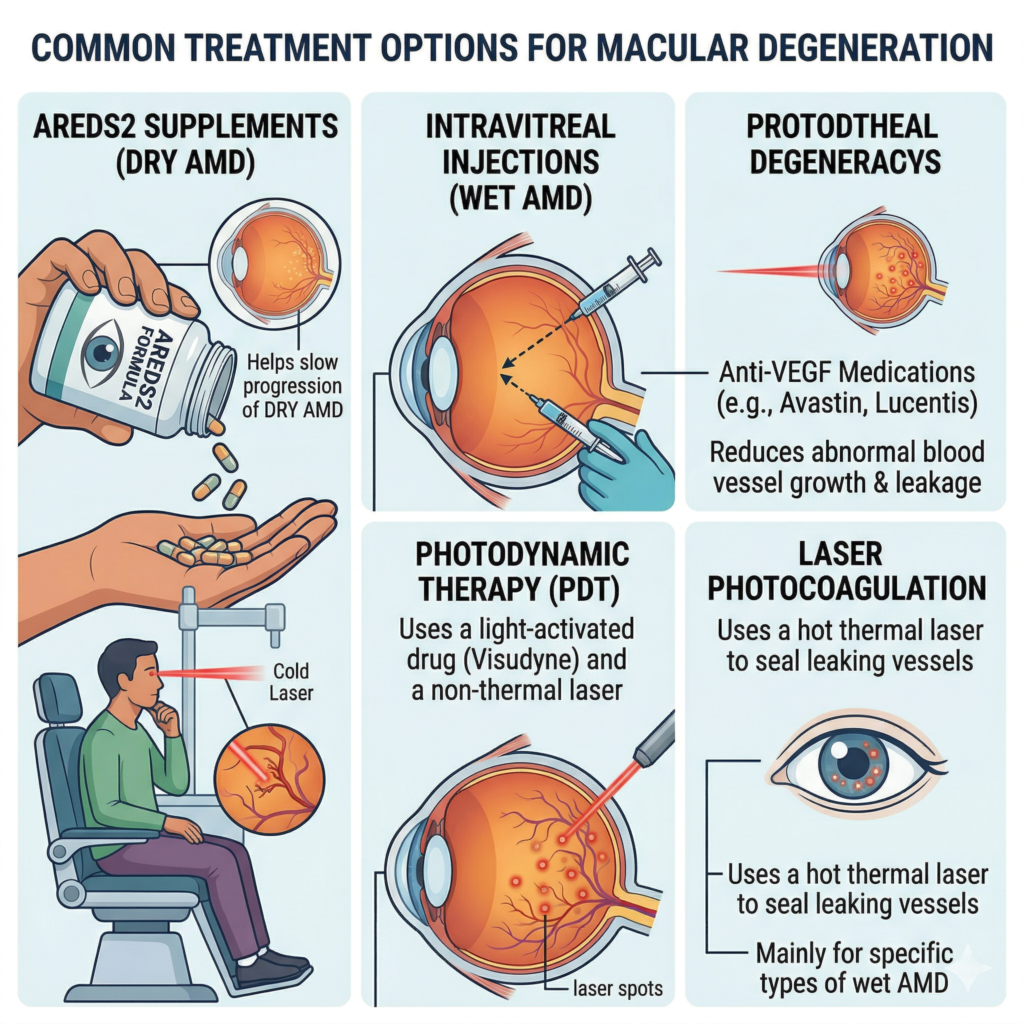
Modern Treatments: What Actually Works
1. Dry AMD Management
No “cure,” but progression can be slowed.
AREDS2 Supplements Include:
- Lutein & Zeaxanthin
- Vitamin C & E
- Zinc
These act like internal defenders against oxidative damage.
2. Wet age-related macular degeneration Treatment (Highly Effective if Early)
Anti-VEGF Injections
These medications block abnormal blood vessel growth.
Benefits:
- Stabilizes vision
- Prevents rapid deterioration
Possible Side Effects:
- Mild irritation
- Temporary blur
- Rare complications (infection, retinal detachment)
3. New Advancement: Pegcetacoplan
Used in Geographic Atrophy, this newer therapy slows retinal cell loss—marking a significant step forward in AMD care.
Expert Insight: Dr. Rachana Tiwari-Patil
With extensive experience in retinal care, Dr. Rachana Tiwari-Patil emphasizes one principle above all:
“AMD doesn’t have to mean helplessness. The earlier we detect subtle retinal changes, the more vision we can preserve.”
Her approach blends early diagnostics, tailored treatment plans, and continuous monitoring—critical for chronic conditions like AMD.
📞 Call for Appointment: +91 9168690448 / +91 9158681123
🌐 www.chetnahospital.co.in
Schedule Your Retina Consultation Today. If you are over 50 and noticing vision distortion, don’t wait. Visit Dr. Rachana Tiwari at Chetna Hospital, the preferred eye care center for residents in Chinchwad and Akurdi.
📍 Address: GP116, G Block, Sambhaji Nagar Rd, Chinchwad, Pune.
What You Can Do: Practical, Everyday Prevention
Diet That Protects Vision
Include:
- Spinach, kale (rich in lutein)
- Fish (omega-3 fatty acids)
- Citrus fruits and berries
- Eggs and colored vegetables
Avoid:
- Processed foods
- Excess sugar
- Fried items
Lifestyle Adjustments
- Quit smoking (most impactful change)
- Control blood pressure
- Exercise regularly
- Schedule annual eye exams after 50
At-Home Monitoring: Amsler Grid
A simple square grid can reveal early distortion.
How to use:
- Look at the center dot
- Cover one eye
- Check if lines appear warped or missing
If yes, consult immediately.
Does Screen Time or Blue Light Cause AMD?
The evidence remains inconclusive. Blue light may strain eyes, but it isn’t definitively proven to cause AMD. Still, moderation and protective lenses can improve comfort.
Can AMD Be Reversed?
In blunt clinical reality, no, reversal is not presently within reach. However, this does not consign one to helpless decline; rather, AMD can be skillfully contained and navigated with deliberate care.
To begin with, timely identification becomes the quiet game-changer. When recognized early, the condition often unfolds at a more languid pace. Consequently, individuals are far more likely to preserve their autonomy, sustaining daily rhythms without excessive reliance on others. Moreover, such vigilance frequently translates into a more dignified, fuller quality of life—one not defined solely by limitation, but by adaptation.
Living with AMD: Subtle Shifts, Significant Gains
Although the diagnosis may initially feel formidable, practical refinements in everyday living can yield disproportionate rewards.
For instance, introducing more luminous lighting within the home environment can dramatically enhance visual clarity. Likewise, amplifying contrast on digital screens renders text and imagery more discernible, reducing ocular strain. In addition, the thoughtful use of magnifying devices or assistive instruments can transform once-frustrating tasks into manageable routines.
Equally important, adjusting typography—whether enlarging font sizes or fine-tuning device settings—can make reading less of a struggle and more of a seamless experience.
Admittedly, conventional spectacles do little to counteract AMD itself; nevertheless, specialized low-vision aids often serve as invaluable companions, quietly restoring ease to daily activities.
In essence, while AMD resists reversal, it does not resist resilience. Through attentive modifications and informed choices, one can still craft a life marked not by restriction but by resourcefulness.
Common Questions Patients Ask about Age-Related Macular Degeneration
People over 50, smokers, and those with a family history.
Not entirely—but risk can be reduced significantly.
Dry AMD: slow (years)
Wet AMD: rapid (months)
At the first sign of distortion—even if mild.
Yes, she specializes in diagnosing and treating both dry and wet AMD.
Final Thoughts: Why Early Care Truly Matters
Ignoring AMD is, in many ways, like overlooking a faint crack in a windshield—initially subtle, almost harmless; however, over time, it tends to spread, distort, and eventually obstruct clarity altogether.
More importantly, early attention can dramatically shift this trajectory. With timely care and consistent monitoring, especially under the guidance of seasoned specialists like Dr. Rachana Tiwari-Patil, the pace of vision decline can often be slowed. In many cases, progression is not only reduced but also stabilized for extended periods.
Moreover, proactive intervention allows patients to retain independence in their daily routines. Instead of reacting to severe vision loss, individuals can, therefore, stay ahead of the condition.
Ultimately, the objective extends beyond merely seeing. Rather, it is about preserving functional, meaningful vision—vision that supports reading, recognizing loved ones, and navigating life with confidence.
A Refined Glimpse into Clinical Mastery: Dr. Rachana Tiwari Patil
Within the intricate realm of ophthalmic science, few practitioners embody both precision and perceptiveness as distinctly as Dr. Rachana Tiwari Patil. Her professional voyage, shaped by rigorous academic discipline and immersive surgical exposure, reflects not merely qualification—but cultivated finesse. Having secured her MS in Ophthalmology from the Maharashtra University of Health Sciences, Dhule, she further honed her acumen through advanced glaucoma training at HV Desai Eye Institute, Pune. Subsequently, her surgical dexterity was sharpened at Wavikar Eye Institute, Mumbai, where she immersed herself in the nuanced art of phaco-refractive procedures.
Breadth of Clinical Care: Beyond the Ordinary Lens
What sets Dr. Patil apart is not just her knowledge, but its expansive application. She orchestrates a wide-ranging spectrum of ophthalmic services, seamlessly transitioning from foundational eye care to intricate subspecialties. From glaucoma stewardship to retinal and corneal restoration, her scope extends into pediatric ophthalmology, neuro-ophthalmic evaluations, uveitic complexities, and even the delicate aesthetics of oculoplasty.
Moreover, she navigates challenging conditions—such as retinopathy of prematurity—with notable assurance. In parallel, she employs advanced laser modalities, including Nd-YAG and green laser therapy, addressing diverse ocular disturbances with calculated precision.
Diagnostic Foresight: Where Technology Meets Intuition
Equally compelling is her diagnostic repertoire. Rather than relying on conventional assessment alone, Dr. Patil integrates high-resolution imaging and analytical tools to decode ocular anomalies. Optical Coherence Tomography (OCT), automated perimetry, and fluorescein angiography—each becomes an extension of her clinical insight.
Additionally, specialized evaluations like corneal topography, enhanced through Pentacam technology, alongside specular microscopy, allow her to construct treatment pathways that are not only accurate but distinctly individualized. In her hands, diagnosis becomes less of a procedure—and more of an informed narrative.
Surgical Versatility: Precision in Motion
Step into the surgical theatre, and her versatility becomes unmistakably evident. Dr. Patil performs a diverse array of procedures, each executed with meticulous control. Cataract interventions—whether via phacoemulsification, small incision techniques, or pediatric adaptations—are conducted with refined ease.
Furthermore, her expertise spans glaucoma surgeries, including trabeculectomy and valve implantation, alongside intricate vitreoretinal operations such as retinal detachment repair and diabetic retinopathy management. Corneal transplantation procedures—DSEK, DMEK, and DALK—add yet another dimension to her surgical portfolio.
Not to be overlooked, she also undertakes refractive corrections like LASIK and PRK, in addition to specialized interventions involving squint correction and lacrimal system reconstruction. Each procedure, distinct in its complexity, is unified by her unwavering attention to detail.
A Philosophy Rooted in Compassionate Precision
Yet, beyond technology and technique lies the essence of her practice—an unwavering commitment to patient-centric care. Dr. Rachana Tiwari Patil does not merely treat conditions; she engages with individuals, aligning clinical excellence with empathy.
Consequently, patients are not just recipients of treatment but participants in a thoughtfully guided journey toward visual restoration. By harmonizing cutting-edge innovation with a humane touch, she delivers care that feels as reassuring as it is advanced.
In a field where clarity is both literal and metaphorical, Dr. Patil stands as a quiet architect of vision—restoring sight, certainly, but more importantly, reinstating confidence in those who seek her care.
Our clinic is conveniently located on Sambhaji Nagar Road, making it easily accessible for patients coming from Thergaon, Kalewadi, and Walhekarwadi.”
Medical Disclaimer
This content is designed for educational awareness; however, it should not be interpreted as a substitute for professional medical consultation. Therefore, for accurate diagnosis and personalized treatment, it is strongly recommended to consult a qualified ophthalmologist.