
Research Brief 01 · Musculoskeletal health · 14 November 2026
In 2020, 619 million people were living with low back pain. By 2050 the number is projected to reach 843 million. It is the world’s leading cause of years lived with disability, yet much of the care people receive does not match the evidence. Here is what the research shows, with every number linked to its source.
The brief in 60 seconds
- 619 million people lived with low back pain in 2020, about 1 in 13 people on Earth. The projection for 2050 is 843 million.
- It is the number one cause of years lived with disability worldwide, accounting for 8.1% of all such years.
- Age-standardised rates actually fell 10.4% between 1990 and 2020. The rise in cases is driven by population growth and ageing.
- 38.8% of the disability is attributed to three modifiable risks: workplace ergonomic factors, smoking and high body-mass index.
- WHO’s first-ever guideline (2023) supports education, exercise, some physical and psychological therapies and NSAIDs, and says 14 interventions, including opioids, braces, traction and TENS, should not be routine care.
- For sciatica, early surgery brings faster relief but similar results at one and five years compared with prolonged conservative care.
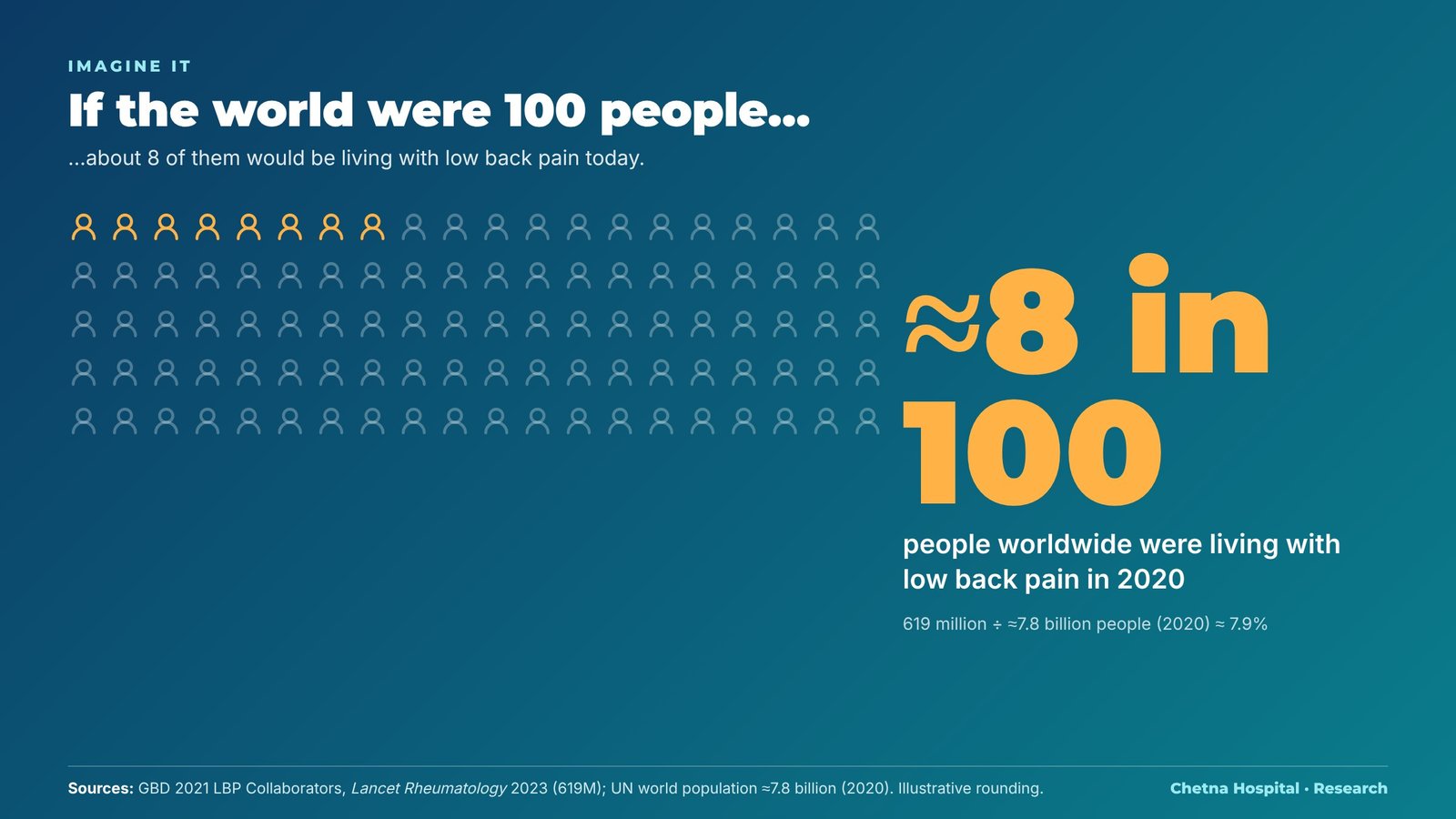
If the world were 100 people, about 8 would be living with low back pain: 619 million out of roughly 7.8 billion people in 2020. WHO puts it at about 1 in 13. Sources: GBD 2021 Low Back Pain Collaborators, Lancet Rheumatology 2023; WHO, 2023. Tip: tap or click any chart in this brief to open it full size.
1. The scale: 619 million people, heading for 843 million
The most complete estimate comes from the Global Burden of Disease (GBD) Study 2021, which modelled data for 204 countries and territories. Its low back pain analysis, published in The Lancet Rheumatology in 2023, found that 619 million people (95% uncertainty interval 554–694 million) were living with low back pain in 2020. The study defined low back pain as pain between the 12th ribs and the gluteal folds lasting at least one day.
The same team projects 843 million cases by 2050 (759–933 million), a rise of 36.4%. The striking detail is that age-standardised prevalence actually fell, by 10.4%, between 1990 and 2020. The average person’s risk has not exploded. There are simply more people, and more of them are older: the paper’s decomposition analysis attributes the projected rise mainly to population growth, followed by population ageing.
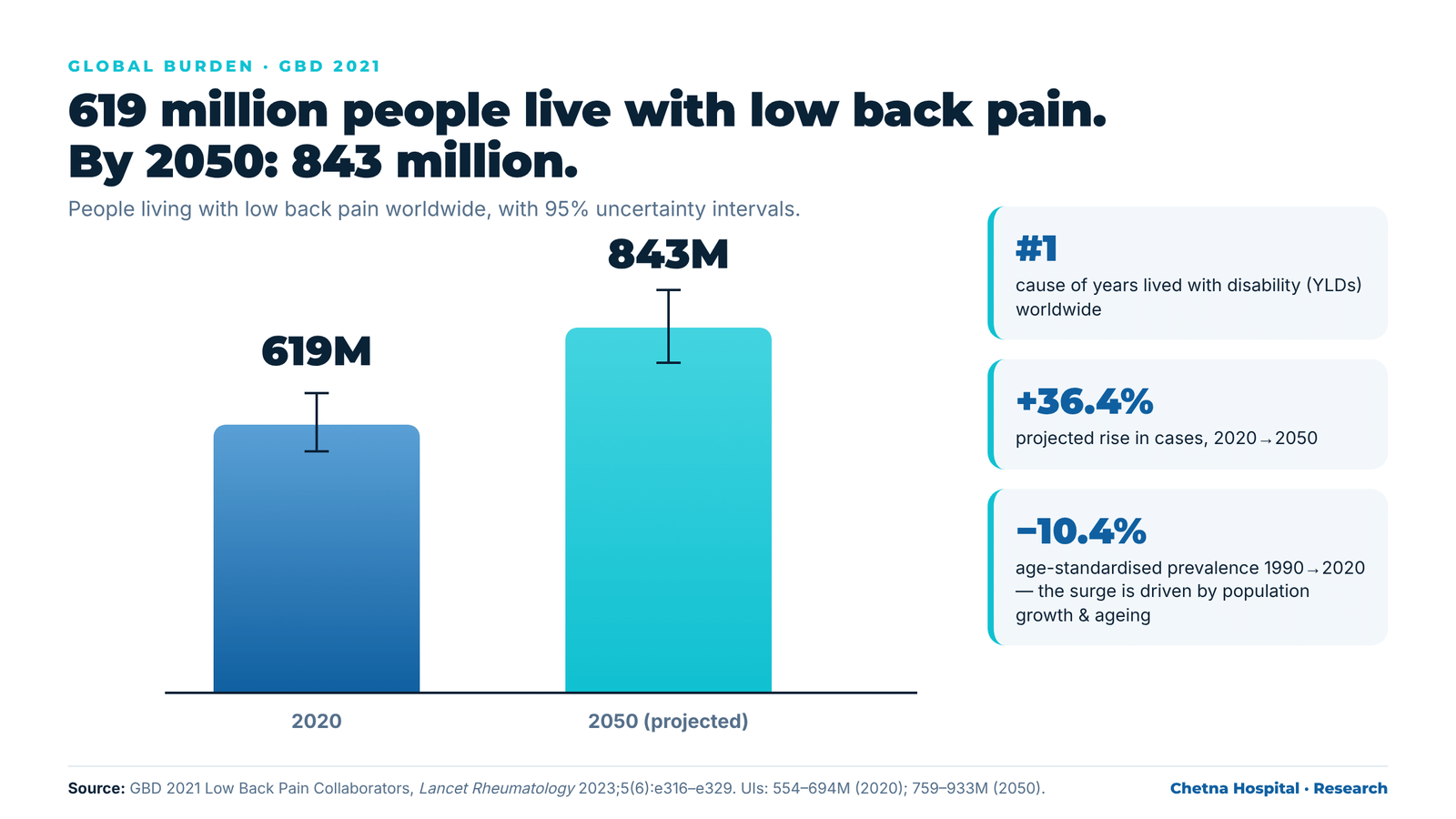
People living with low back pain worldwide in 2020 and projected for 2050, with 95% uncertainty intervals. Source: GBD 2021 Low Back Pain Collaborators, Lancet Rheumatol 2023;5(6):e316–e329.
Measured as burden, low back pain caused 69 million years lived with disability in 2020. (Years lived with disability, or YLDs, count time spent living with a health problem, weighted by how severe it is.) That is 8.1% of all YLDs from every cause, making low back pain the largest single contributor worldwide.
2. Who carries the burden
Low back pain affects every age group and every country, but the data show clear patterns.
- Women more than men. Global age-standardised prevalence was 9,330 per 100,000 among women and 5,520 among men.
- Older people most. Prevalence rises with age and peaks at around 85. People aged 80–84 carry the highest rate of years lived with disability.
- Highest rates in central Europe. Hungary (14,000 per 100,000) and Czechia (13,100) had the highest age-standardised prevalence in 2020; the Maldives (5,050) and Myanmar (5,090) had the lowest.
- Growth concentrated in Asia and Africa. WHO expects the greatest growth in Africa and Asia, “where populations are getting larger and people are living longer”. Most GBD regions face a rise of more than 25% by 2050; central Europe, eastern Europe and high-income Asia Pacific are projected to see falls.
- Poorer people hit harder. Disabling low back pain is over-represented among people with low socioeconomic status (Hartvigsen et al., Lancet 2018).
What about India?
GBD’s estimates for South Asia, the region that includes India, put the number of people living with low back pain at 117 million in 2020 (103–134 million), with a projection of 176 million by 2050 (158–191 million). Country-level estimates, including India’s, are in the paper’s appendix (pp 37–52), but the authors caution that primary country-level data remain scarce and call for “more high-quality, primary, country-level data”. The 2018 Lancet series warned that disability and costs are projected to increase, particularly in low- and middle-income countries, “where health and other systems are often fragile and not equipped to cope with this growing burden”.
3. What drives it, and what can change
For nearly everyone with low back pain, no specific source of the pain can be identified. Only a small proportion of people have a well-understood cause, such as a vertebral fracture, cancer or infection (Hartvigsen et al., 2018). WHO uses the term chronic primary low back pain for pain lasting more than three months that is not due to an underlying disease or condition. It accounts for more than 90% of chronic low back pain seen in primary care.
GBD 2021 attributes 38.8% of the disability from low back pain to three modifiable risks. Taken one at a time, occupational ergonomic factors account for 22.0%, smoking for 12.5% and high body-mass index for 11.5%. The combined figure is lower than the sum because the risks overlap. The workplace share is highest among men aged 15–49, at 34.3%.
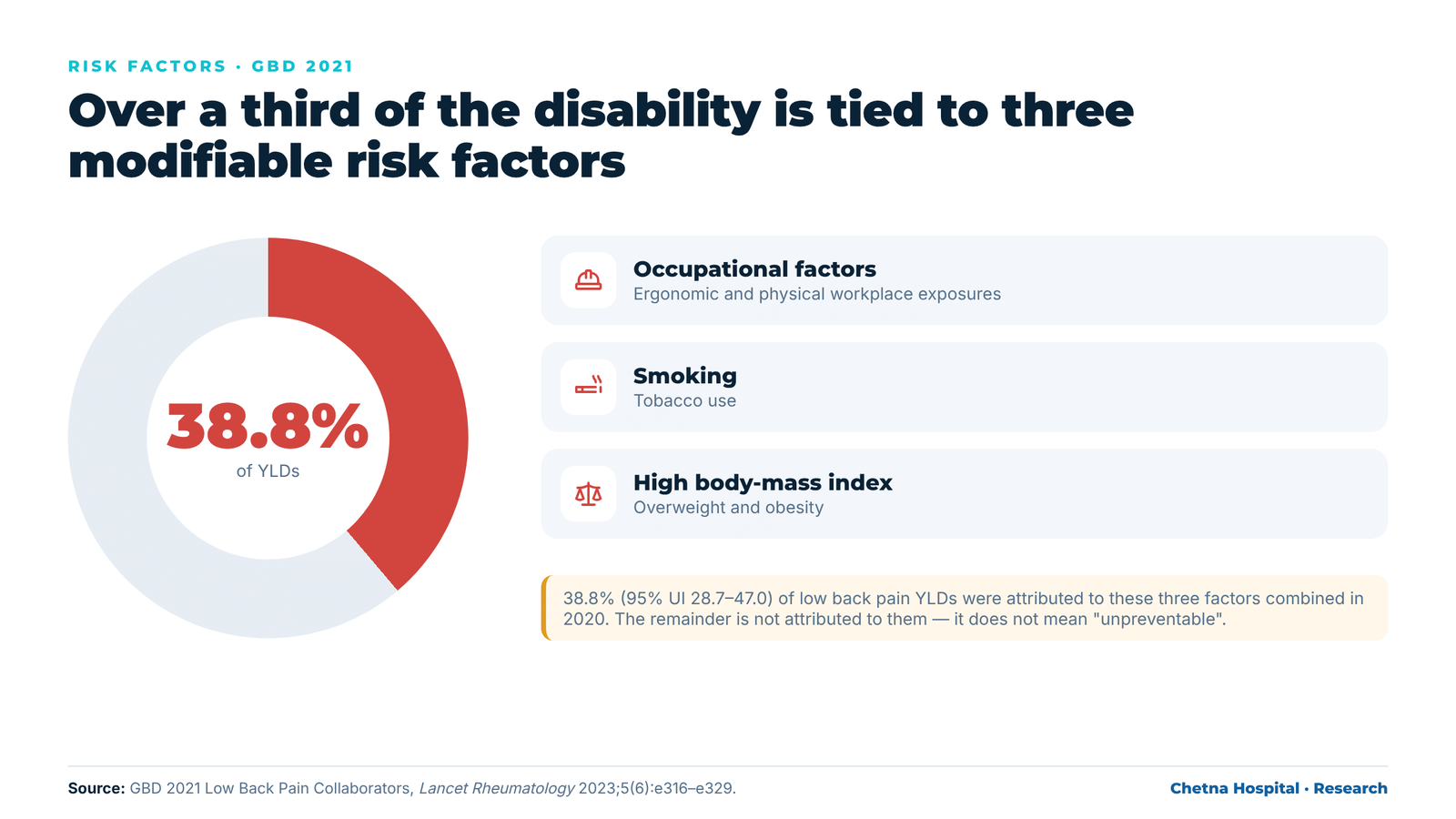
Share of low back pain years lived with disability attributed to occupational ergonomic factors, smoking and high body-mass index combined, 2020 (95% UI 28.7–47.0%). Source: GBD 2021 Low Back Pain Collaborators, Lancet Rheumatol 2023.
The 2018 Lancet series adds that people with physically demanding jobs, people with physical and mental health conditions, smokers and people with obesity are at greatest risk of reporting low back pain. High pain intensity at the start, psychological distress and pain at several body sites all raise the risk that the pain becomes persistent and disabling.
4. The money: the costliest condition in US health care
The economic signal is just as strong. An analysis of US health spending across 154 conditions, published in JAMA in 2020, found that low back and neck pain had the highest spending of any condition in 2016: an estimated $134.5 billion (95% CI $122.4–146.9 billion). That was more than diabetes ($111.2 billion) and ischaemic heart disease ($89.3 billion). Private insurance paid 57.2% of the bill, public insurance 33.7% and patients 9.2% out of pocket.
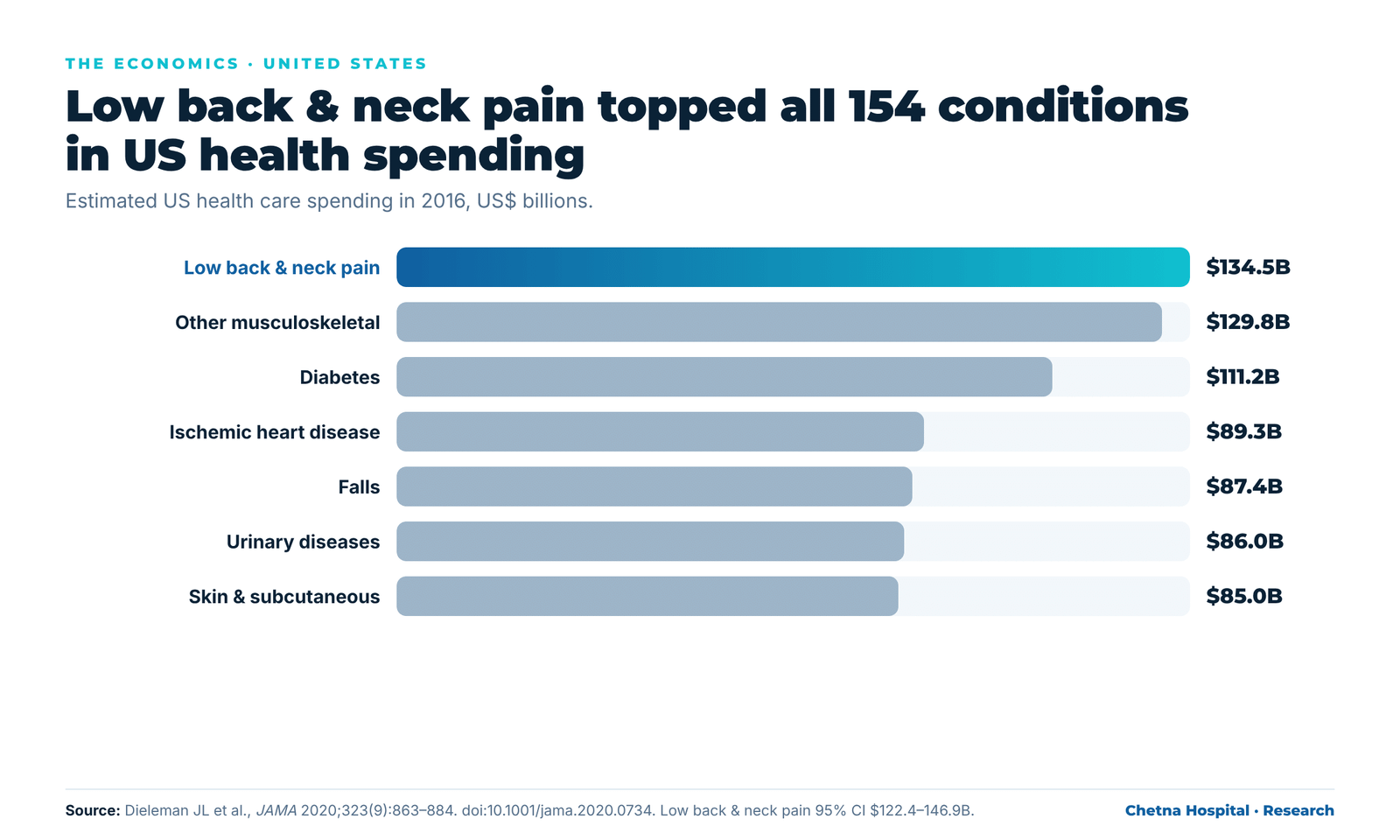
Estimated US health care spending in 2016 for the seven highest-spending conditions, in US$ billions. Source: Dieleman JL et al., JAMA 2020;323(9):863–884.
These sources do not give a comparable spending figure for India. The Lancet series notes that the cost, health-care use and disability linked to low back pain “vary substantially between countries and are influenced by local culture and social systems”.
5. Where WHO stands: its first-ever guideline
On 7 December 2023, WHO released its first-ever guidelines on managing chronic low back pain in primary and community care. The guideline covers non-surgical care for adults, including older people. It asks health workers to start with a thorough assessment from a biopsychosocial perspective (physical, psychological and social), to give personalised information and advice, and to tailor a package of interventions. In WHO’s words: “Generally, start with the least invasive and least potentially harmful intervention(s).”
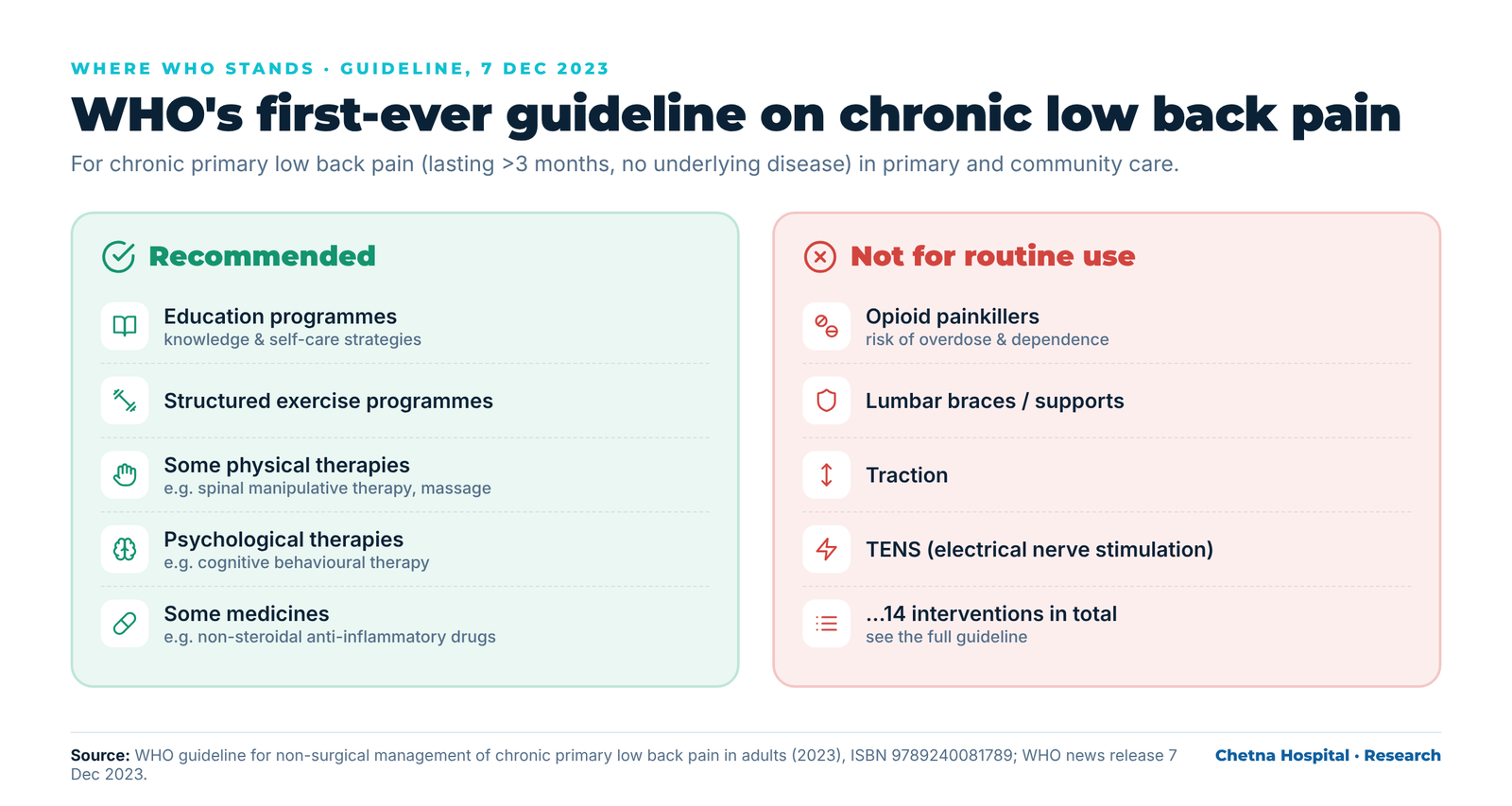
What WHO’s 2023 guideline recommends for chronic primary low back pain, and examples of interventions it says should not be routine care. Sources: WHO guideline, ISBN 9789240081789; WHO news release, 7 December 2023.
In all, the guideline sorts 25 interventions. Eleven may be offered in most contexts: structured education and advice, structured exercise, needling therapies, spinal manipulative therapy, massage, mobility assistive products, operant therapy, cognitive behavioural therapy, NSAIDs (the recommendation excludes older people), topical cayenne pepper (capsicum) and multicomponent biopsychosocial care.
Fourteen should not be used as part of routine care, because WHO judged that their potential harms likely outweigh the benefits. They are traction, therapeutic ultrasound, TENS (transcutaneous electrical nerve stimulation) and lumbar braces, belts or supports; opioid analgesics, SNRI and tricyclic antidepressants, anticonvulsants, skeletal muscle relaxants, glucocorticoids and injectable local anaesthetics; the herbal remedies devil’s claw and white willow; and pharmacological weight loss. WHO singles out opioid painkillers as medicines that “can be associated with overdose and dependence”.
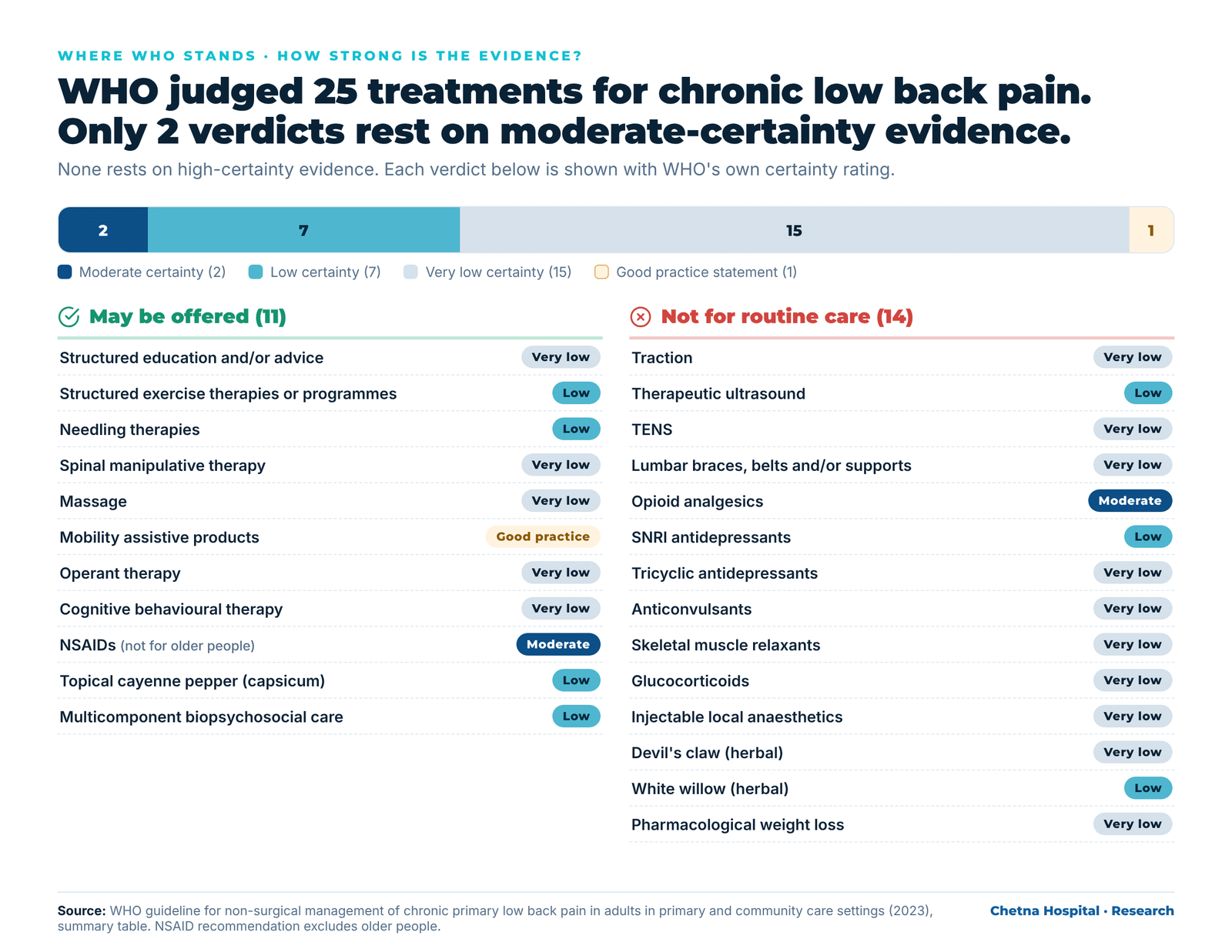
All 25 WHO verdicts on chronic primary low back pain, with WHO’s own certainty-of-evidence rating for each. Source: WHO guideline summary (2023).
The certainty ratings tell their own story. Only two of the 25 verdicts, the one for NSAIDs and the one against opioids, rest on moderate-certainty evidence. Seven rest on low-certainty evidence, 15 on very-low-certainty evidence, and one is a good-practice statement. None rests on high-certainty evidence. For researchers, that is arguably the real headline: the world’s leading cause of disability is still managed largely on weak evidence.
6. The gap between evidence and everyday practice
Guidelines broadly agree; practice often does not follow them. A 2018 Lancet review by Foster and colleagues found, worldwide, “limited use of recommended first-line treatments and inappropriately high use of imaging, rest, opioids, spinal injections, and surgery”. Its verdict was blunt: “Doing more of the same will not reduce back-related disability or its long-term consequences.”
The same review flags a gap that matters for India: the recommendations are “based on trials almost exclusively from high-income countries”. Among the most promising directions it lists are redesigned clinical pathways, integrated health and occupational interventions to reduce work disability, and public health and prevention strategies.
7. Imagine two journeys for the same back
Illustrative scenario · a composite, not a real patient · not medical advicePriya is 41 and works as a product manager in Pune. Her lower back has hurt, on and off, for four months. A doctor has examined her and found no warning signs of a serious underlying cause. From here, two very different journeys are possible.
Journey A: what the evidence warns against
- A scan straight away, without a specific clinical reason
- Advice to rest until the pain settles
- Strong painkillers (opioids) for ongoing relief
- A lumbar belt, plus a course of traction or TENS
- Early referral for spinal injections or surgery to “fix” the back
Each step is either named by Foster et al. (Lancet, 2018) as overused, or listed by WHO (2023) as not for routine care.
Journey B: what WHO’s guideline describes
- A thorough assessment of physical, psychological and social factors
- Clear, personalised information and advice, and support to return to the activities that matter to her
- A structured exercise programme, with options such as spinal manipulation, massage or needling
- Psychological support such as cognitive behavioural therapy, if it fits her needs
- NSAIDs if they are suitable for her, and prompt review if warning signs ever appear
Each element comes from WHO’s 2023 guideline. Which mix suits a real person is a decision for her and her clinician.
Both journeys feel like “doing something”. The difference is that Journey B follows what the available evidence supports, while Journey A spends money and accepts risk on interventions that the research does not back for routine use.
8. When surgery enters the picture: the sciatica trials
Sciatica, leg pain caused by an irritated or compressed nerve root and often due to a herniated disc, is a different problem from non-specific back pain. It is where surgery has its clearest role. Two Dutch randomised trials, reported in four papers, frame the debate.
- Early surgery versus prolonged conservative care (NEJM, 2007). The trial enrolled 283 patients who had had severe sciatica for 6–12 weeks. Early surgery brought faster relief of leg pain and faster perceived recovery (hazard ratio 1.97). But there was no significant difference in disability over the first year, and after one year the probability of perceived recovery was 95% in both groups. Of the conservative group, 39% were eventually operated on, after a mean of 18.7 weeks.
- The same trial at five years (BMJ Open, 2013). There were no significant differences between the groups on the primary outcomes. 46% of patients allocated to conservative care had surgery because of severe leg pain and disability. Age over 40, severe leg pain at the start and a higher affective pain score predicted an unsatisfactory recovery.
- Endoscopic versus open surgery (The BMJ, 2022). In a trial of 613 patients, percutaneous transforaminal endoscopic discectomy (PTED) was non-inferior to open microdiscectomy for leg pain at 12 months, with less blood loss, shorter hospital stays and earlier mobilisation. Patient-reported outcomes favoured PTED, but the authors note the differences were small and “may not reach clinical relevance”. A companion economic evaluation (BJSM, 2022) found PTED more cost-effective from a societal perspective: the operation itself cost more (€4,500 vs €4,095 per patient), but total societal costs were lower.
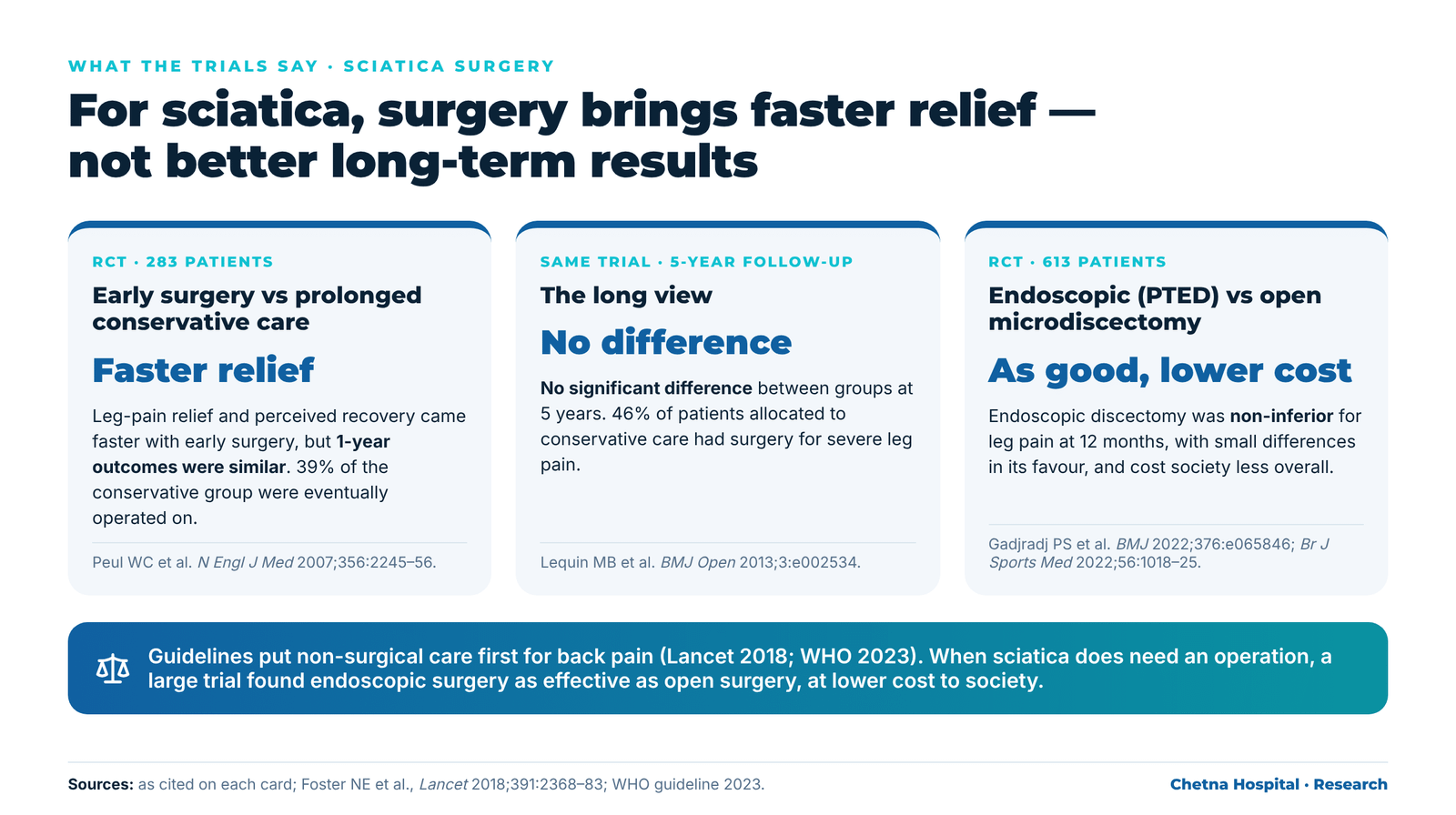
Key results from the two sciatica trials. Sources: Peul et al., NEJM 2007; Lequin et al., BMJ Open 2013; Gadjradj et al., BMJ 2022 and Br J Sports Med 2022.
The authors of the five-year follow-up summed up the trade-off: prolonged conservative care “might give patients a fair chance for pain and disability to resolve without surgery, but with the risk to receive delayed surgery after prolonged suffering of sciatica”. That makes surgery for sciatica a decision for a well-informed patient and a specialist, not a default.
9. What it means
For people with back pain
Most new episodes recover quickly, although recurrence is common (Lancet, 2018). Ask about education and exercise before scans, braces or strong painkillers, and know the warning signs below.
For employers and founders
Workplace ergonomic factors alone account for 22% of the disability from low back pain (GBD 2021). The Lancet series lists integrated health and occupational interventions among the most promising ways to reduce work disability.
For health systems and insurers
Low back and neck pain was the single costliest condition in US health care in 2016 ($134.5 billion; JAMA 2020). The Lancet series argues that the advances with the greatest potential are “those that align practice with the evidence”.
For researchers and editors
Only 2 of WHO’s 25 verdicts rest on moderate-certainty evidence, the trials behind the guidelines come almost entirely from high-income countries, and GBD’s authors call for better country-level data. South Asia, home to an estimated 117 million people with low back pain, is largely missing from that evidence base.
When back pain needs urgent attention
Go to an emergency department straight away if back pain comes with any of these:- pain, tingling, weakness or numbness in both legs
- loss of feeling around the genitals or anus
- changes in bladder or bowel control, such as difficulty passing urine or incontinence
- new problems with sexual function
- chest pain
- pain that started after a serious accident, such as a car crash
Back pain or sciatica? Talk to a specialist
Chetna Hospital’s spine and rehabilitation teams in Pimpri-Chinchwad assess back pain and sciatica. This brief is general information; a clinician can tell you what applies to you.
Key numbers and sources
For editors and researchers: the figures in this brief, with uncertainty ranges where the source gives them. Full citations are in the next section.
Read the research
The original papers and documents behind this brief. Where a free full text exists, we link to it.
- GBD 2021 Low Back Pain Collaborators. Global, regional, and national burden of low back pain, 1990–2020, its attributable risk factors, and projections to 2050: a systematic analysis of the Global Burden of Disease Study 2021. Lancet Rheumatol. 2023;5(6):e316–e329. DOI · Free full text
- World Health Organization. WHO guideline for non-surgical management of chronic primary low back pain in adults in primary and community care settings. Geneva: WHO; 2023. ISBN 9789240081789. Publication page · Summary (PDF)
- World Health Organization. WHO releases guidelines on chronic low back pain. News release, 7 December 2023. Read
- Hartvigsen J, Hancock MJ, Kongsted A, et al. What low back pain is and why we need to pay attention. Lancet. 2018;391(10137):2356–2367. DOI · PubMed
- Foster NE, Anema JR, Cherkin D, et al. Prevention and treatment of low back pain: evidence, challenges, and promising directions. Lancet. 2018;391(10137):2368–2383. DOI · PubMed
- Dieleman JL, Cao J, Chapin A, et al. US health care spending by payer and health condition, 1996–2016. JAMA. 2020;323(9):863–884. DOI · Free full text
- Peul WC, van Houwelingen HC, van den Hout WB, et al. Surgery versus prolonged conservative treatment for sciatica. N Engl J Med. 2007;356(22):2245–2256. DOI · PubMed
- Lequin MB, Verbaan D, Jacobs WC, et al. Surgery versus prolonged conservative treatment for sciatica: 5-year results of a randomised controlled trial. BMJ Open. 2013;3(5):e002534. DOI · Free full text
- Gadjradj PS, Rubinstein SM, Peul WC, et al. Full endoscopic versus open discectomy for sciatica: randomised controlled non-inferiority trial. BMJ. 2022;376:e065846. DOI · Free full text
- Gadjradj PS, Broulikova HM, van Dongen JM, et al. Cost-effectiveness of full endoscopic versus open discectomy for sciatica. Br J Sports Med. 2022;56(18):1018–1025. DOI · Free full text
- NHS. Back pain. Patient information, accessed 14 November 2026. Read
How this brief was made
Every figure in this brief comes from the primary sources listed above: peer-reviewed papers and official WHO documents. Each was checked against the original text before publication, and uncertainty intervals are given where the source reports them. The charts were drawn by Chetna Hospital from the published data. AI tools assisted with research and drafting. This brief is general information, not medical advice, and does not replace an assessment by a qualified clinician. Spotted an error? Tell us and we will correct it.
Cite this brief
Chetna Hospital Research Articles. Low back pain: the world’s leading cause of disability. Research Brief 01, 14 November 2026. https://chetnahospital.co.in/research-articles/low-back-pain-global-burden/