Myopia in children often shows first as a child who sits close to the TV or holds a phone near the face. Short sight makes far things blurry while near things stay clear. So if you notice squinting, headaches, eye rubbing or trouble reading the board at school, plan an eye check. Glasses help the child see clearly at school and at play.
Eye care department, Chetna Hospital, Chinchwad
Consulting 1, Chetna Hospital, Plot No GP 116, Sambhaji Nagar Road, Near Rotary Club, G Block, MIDC, Pimpri-Chinchwad, Pune 411019
Key takeaways
- Sitting close to the TV is a common clue a parent notices.
- Children rarely say “I can’t see”. They adjust instead.
- Time outdoors in daylight is linked to less short sight.
- Wearing the correct glasses does not make myopia worse.
- Regular eye checks pick up a change in power early.
In this article
- Why it matters in the school holidays
- Signs parents should know
- What causes it
- What helps at home
- The eye check, step by step
- When to see an eye doctor urgently
- Where to get eye care in Chinchwad
- Questions parents ask
Last updated 9 November 2026
“She only sits close because she likes the cartoons.” Parents often say this at the eye clinic. Then, when the eyes are tested, the far letters can turn out to be a blur. Children rarely complain, because they think everyone sees the world this way.
The eye care department at Chetna Hospital examines children’s eyes. This guide sets out the early signs of myopia in children, what helps at home and what happens at the eye check.
Why does myopia in children need attention in the school holidays?
During school holidays and long weekends, many children spend more time at home. There is less walking to school and less playground time. Instead, there may be more hours of TV, phone and tablet, often indoors. An NHS hospital leaflet on myopia in children lists spending a lot of time indoors and a lot of close work on phones, tablets and laptops among the things linked to short sight (University Hospitals Sussex NHS).
So a holiday is also a good time to spot myopia in children early, because you see how they hold a phone and where they sit.
Which signs of myopia in children should parents know?
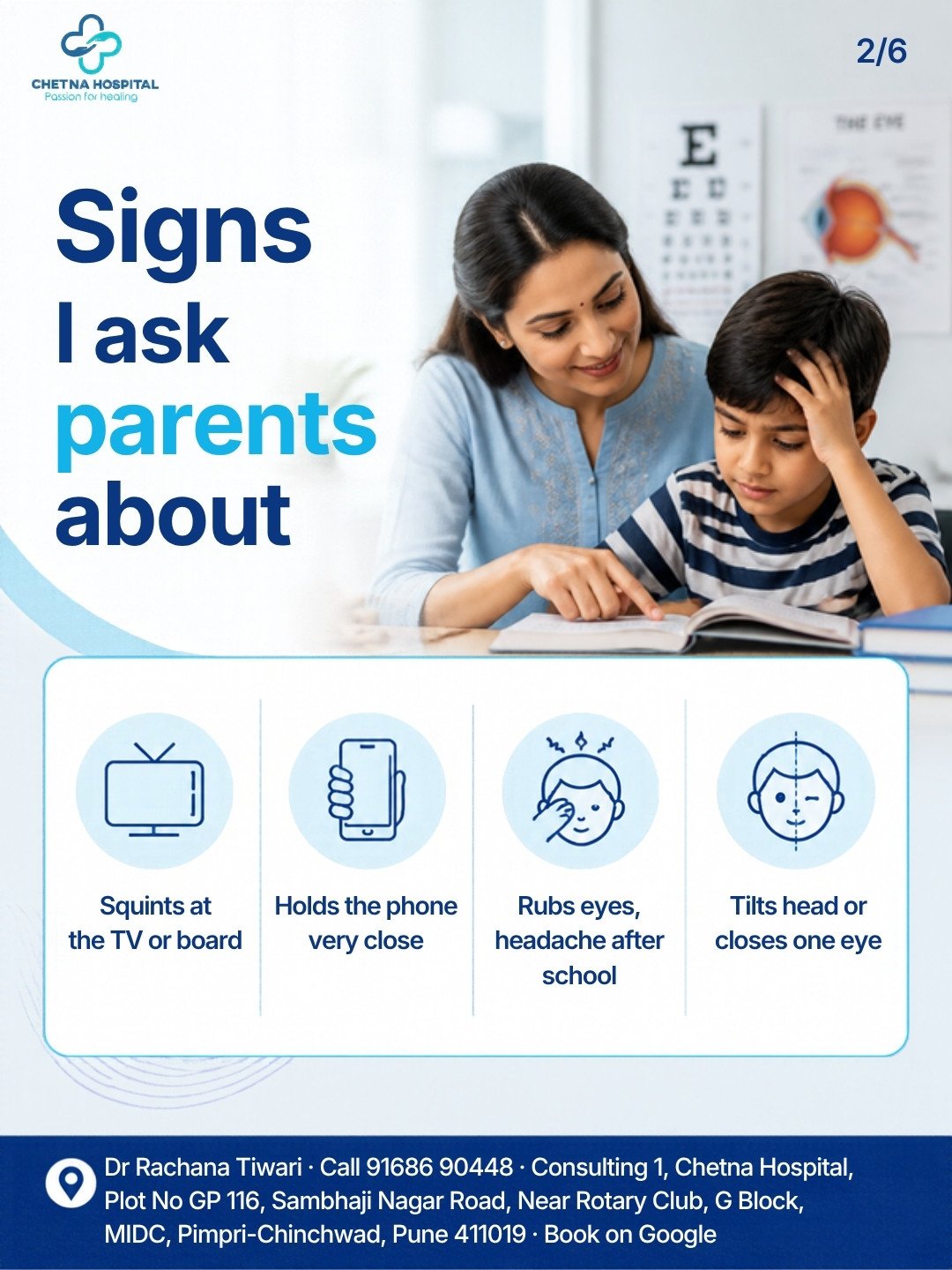
Children adapt, so the signs are small. The NHS and the American Academy of Ophthalmology list signs like these:
- Sitting close to the TV or computer.
- Holding a phone or tablet close to the face.
- Trouble reading words far away, such as on the board at school.
- Squinting to see properly.
- Headaches, eye strain or rubbing the eyes a lot.
Any one of these is enough reason for an eye check. You do not need to wait for a complaint.
What causes myopia in children?
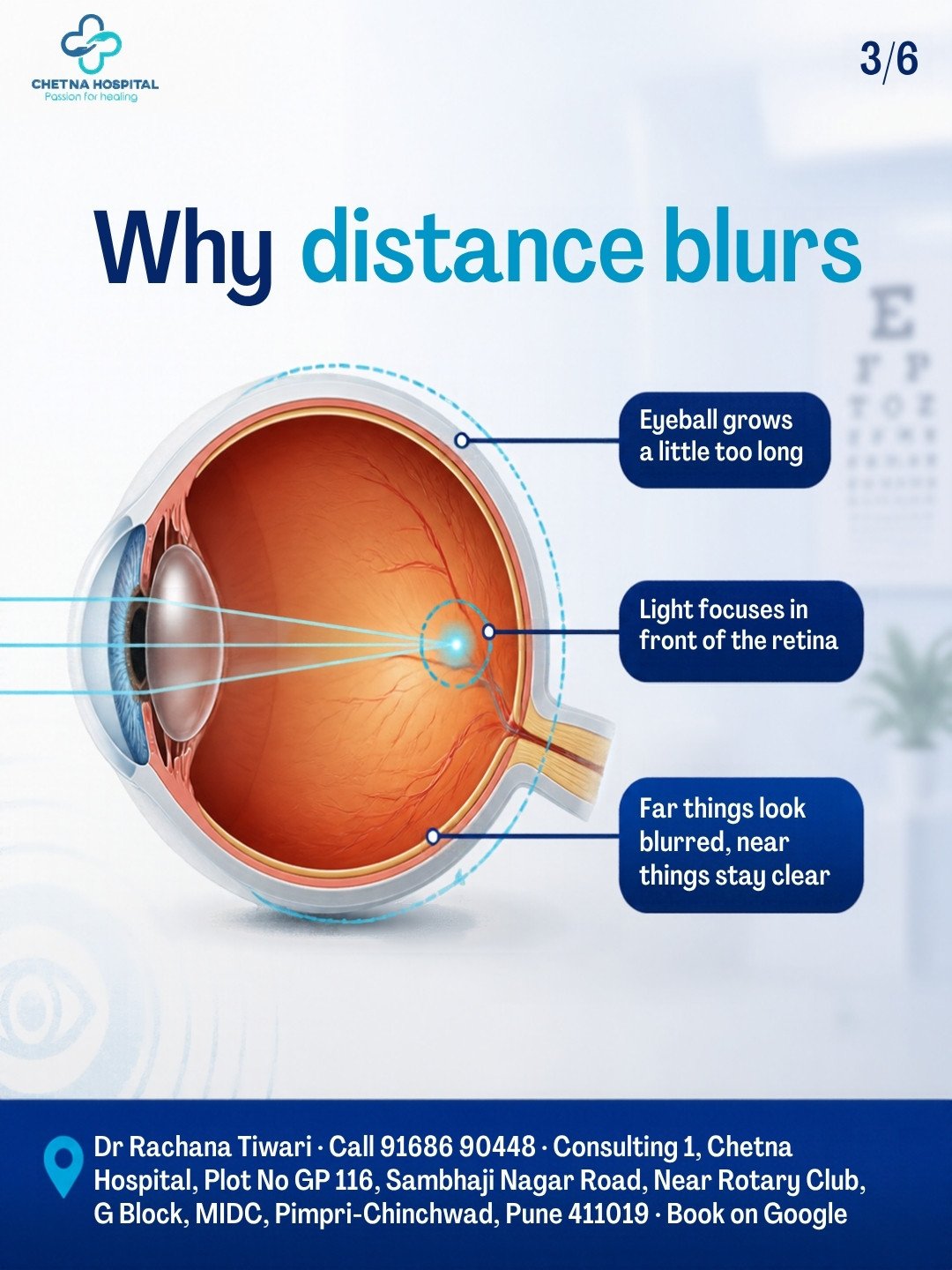
In a short-sighted eye, the eye is often a little longer from front to back than usual. As a result, light from far objects is focused in front of the retina instead of on it. Near objects, however, still look clear. The American Academy of Ophthalmology notes that it is often found between eight and twelve years of age and may get worse in the teen years, when the body grows fast.
Short sight often runs in families, so a child with short-sighted parents needs closer watching (NHS). The NHS leaflet also names a South Asian background as a risk factor. Lifestyle matters too. The American Academy of Ophthalmology says that more time outdoors in natural light lowers a child’s risk.
As a child grows, the eyes grow too, and this can make short sight get worse over time (University Hospitals Sussex NHS). That is why the power can change from one check to the next.
Slides to save and share
What helps at home during the school holidays?
The NHS leaflet on myopia in children gives parents simple habits (University Hospitals Sussex NHS):
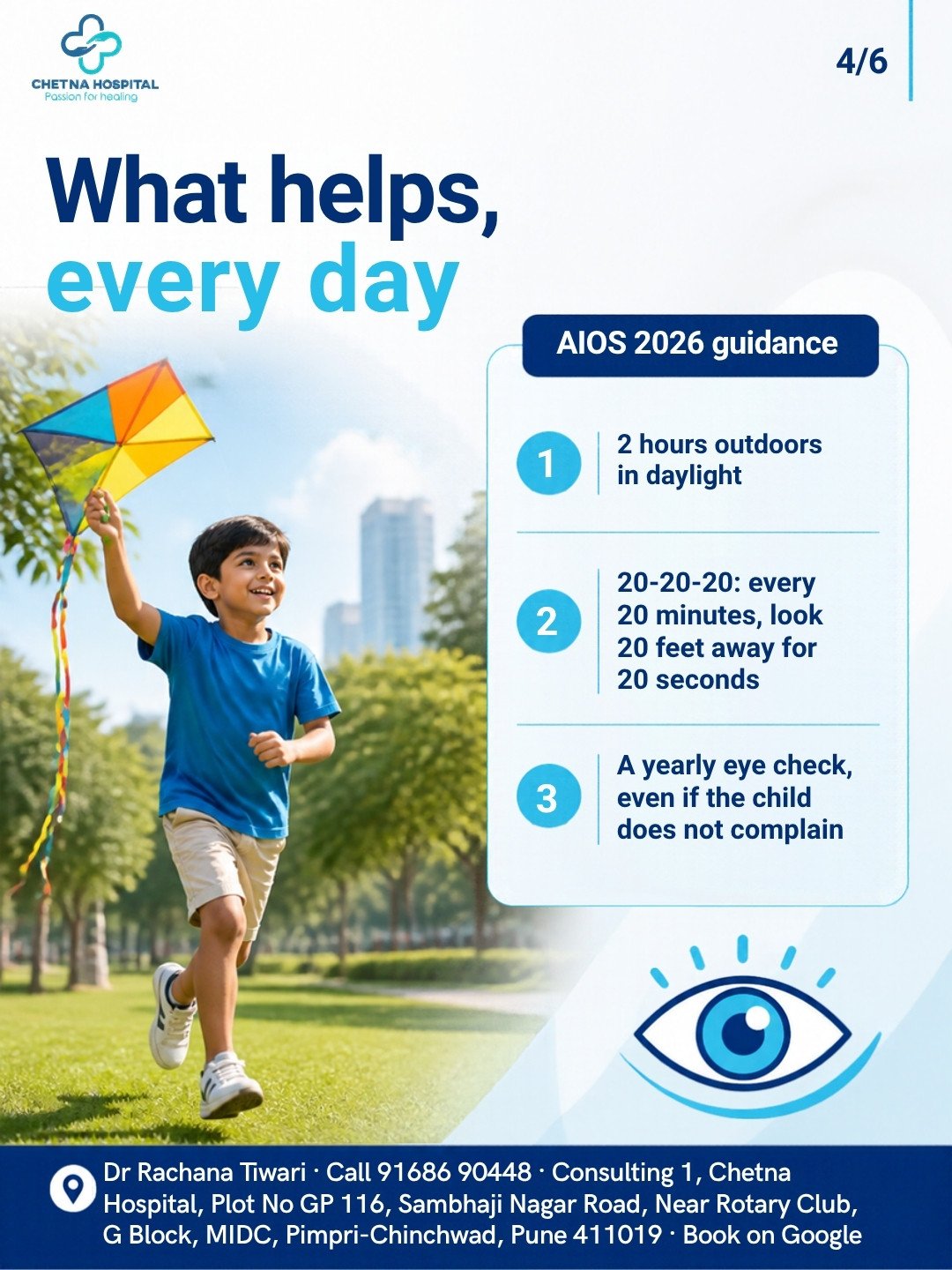
- At least two hours outdoors in daylight every day. Play, walks, cycling and sport all count.
- Short breaks from close work. The leaflet’s rule is 20 minutes of work, then 20 seconds of rest.
- Regular eye checks, even if the child does not complain. The NHS suggests an eye test if a child has not had one for two years (NHS). Your eye doctor will tell you how often your child needs one.
For other everyday eye comfort tips, see our guide on dehydration and vision problems.
How is myopia in children checked, step by step?
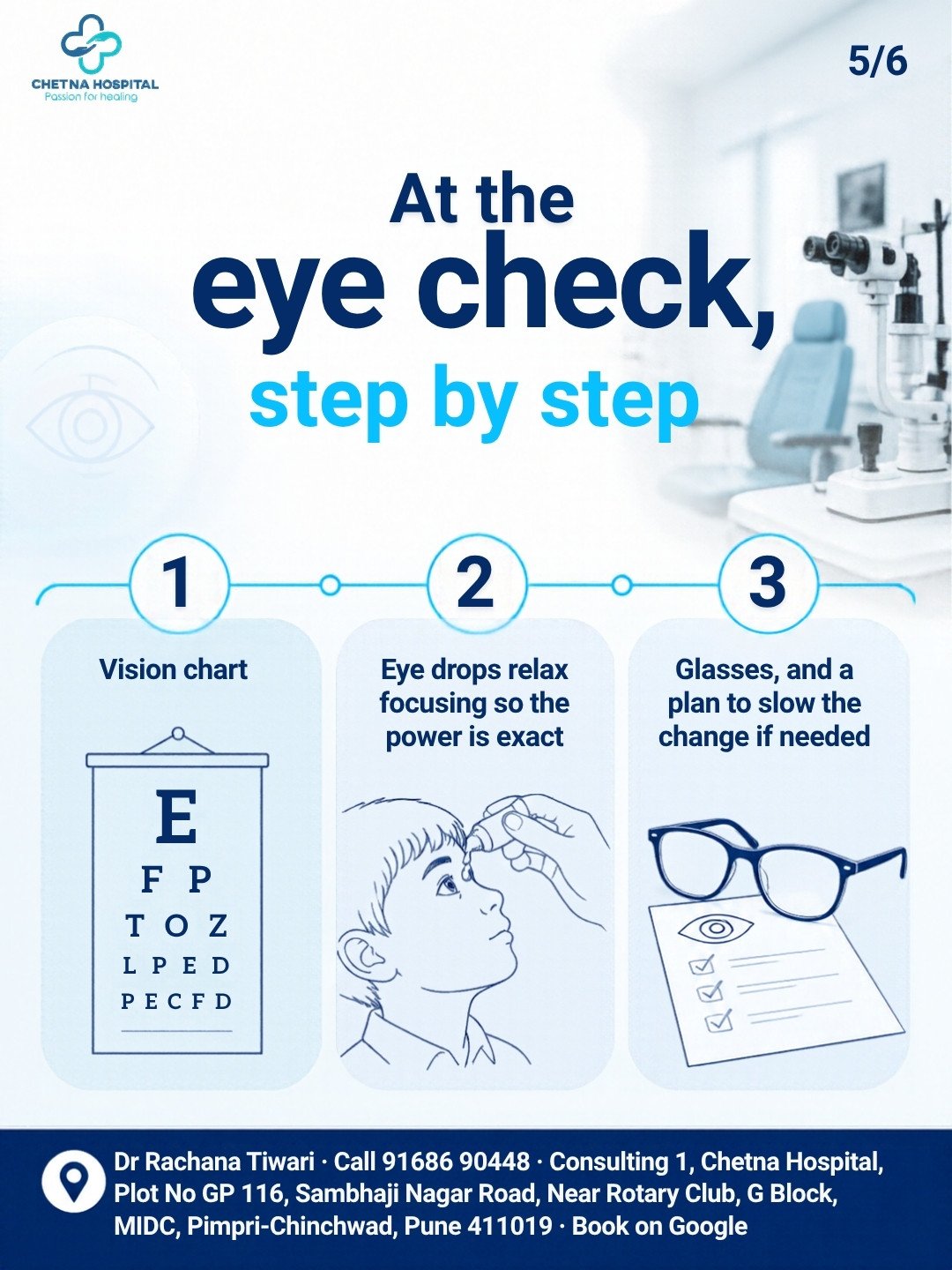
First, the child looks at a light or reads letters on a chart while different lenses are placed in front of the eyes (NHS).
Then the doctor may put in eye drops. They relax the focusing muscles inside the eye and widen the pupils, so the doctor can examine the eye properly. The drops can take up to 40 minutes to work. Afterwards, vision can stay blurry for up to 24 hours, and the eyes may be sensitive to light, so a sun hat or sunglasses can help (University Hospital Southampton NHS). Plan a longer visit, and let the school know that close work may be harder that day.
Next, the doctor examines the front and back of the eye. Finally, glasses and a follow-up date are discussed. Glasses or contact lenses help focus light on the retina so the child can see clearly (American Academy of Ophthalmology).
If the power is rising fast, the eye doctor may discuss options that can slow the change, such as special eye drops or special glasses or contact lenses. These slow the change but do not reverse short sight, and they need regular follow-up (University Hospitals Sussex NHS). So the decision is made together with the parents.
When should a child see an eye doctor urgently?
Myopia in children usually builds slowly. However, some signs need an urgent eye check, without waiting for the next routine visit (NHS):
- A white glow in the pupil, seen in dim light or in a flash photo.
- Eye movements your child cannot control.
- A swollen or painful eye.
- A new problem with vision.
An eye injury needs emergency care. This includes something hitting the eye at high speed, such as a firecracker, a sharp object in the eye, a strong chemical in the eye, severe pain, blood from the eye or any change in sight after an injury (NHS). If a chemical gets in the eye, keep rinsing it with clean, lukewarm water while you get help. In an emergency, call 108 or 112.
Where can you get eye care for your child in Chinchwad?
Chinchwad: Eye care department, Consulting 1, Chetna Hospital, Plot No GP 116, Sambhaji Nagar Road, Near Rotary Club, G Block, MIDC, Pimpri-Chinchwad, Pune 411019. Call 91686 90442. Directions
Families visit from Chinchwad, Pimpri, Akurdi, Nigdi, Ravet and Wakad. Others come from Hinjewadi, Pimple Saudagar, Thergaon, Tathawade, Punawale, Moshi and Bhosari. For other eye problems, see our eye care services in Chinchwad and the eye clinic page.
Myopia in children: questions parents ask
Is myopia in children permanent?
Usually yes. Glasses or lenses correct the blur, but they do not change the shape of the eye. An eye doctor can discuss options that may slow the change while the child is growing.
How much outdoor time helps?
An NHS leaflet on myopia in children advises at least two hours a day outside in daylight. Play, walks and sport all count.
Can glasses make my child’s eyes weaker?
No. Wearing the correct glasses or contact lenses does not make myopia worse. Power can still rise as the eye grows, which is why regular checks matter.
At what age should a child have an eye check?
Eye checks start in infancy. Between three and five years, a child’s vision and eye alignment should be checked, and earlier if you notice any sign.
Where can I get my child’s eyes checked in Chinchwad?
The eye care department at Chetna Hospital sees children at Consulting 1, Chetna Hospital, Sambhaji Nagar Road, Chinchwad. Call 91686 90442.
Eye care department, Chetna Hospital, Chinchwad
Consulting 1, Chetna Hospital, Plot No GP 116, Sambhaji Nagar Road, Near Rotary Club, G Block, MIDC, Pimpri-Chinchwad, Pune 411019
Sources
- American Academy of Ophthalmology: Nearsightedness, What Is Myopia?
- American Academy of Ophthalmology: Eye Screening for Children
- NHS: Short-sightedness (myopia)
- NHS: Short-sightedness, diagnosis
- University Hospitals Sussex NHS Foundation Trust: Myopia in children (patient leaflet)
- University Hospital Southampton NHS Foundation Trust: Eye drops used in the children’s eye clinic
- NHS: Retinoblastoma, symptoms
- NHS: Eye injuries
Disclaimer: This article is for general awareness. It does not replace a medical consultation. Please see an eye doctor for advice about your child’s eyes.
How this article was prepared: Chetna Hospital’s content team wrote it with the help of AI writing tools and checked it against the sources listed. It is general health information, not personal medical advice.