







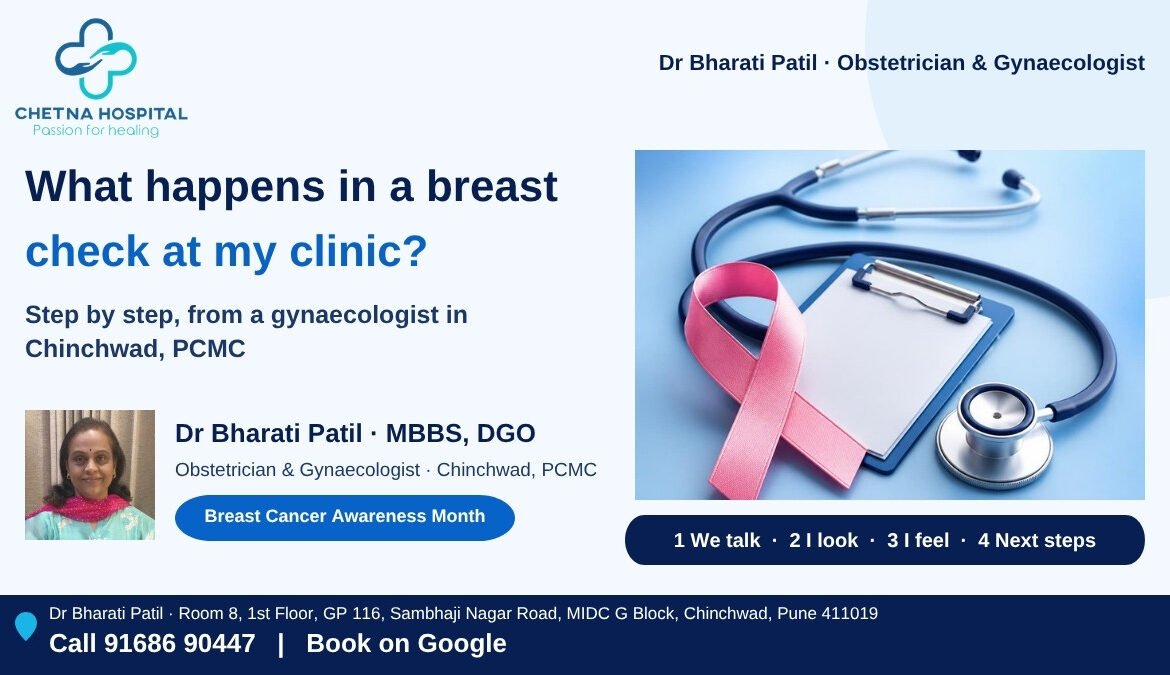
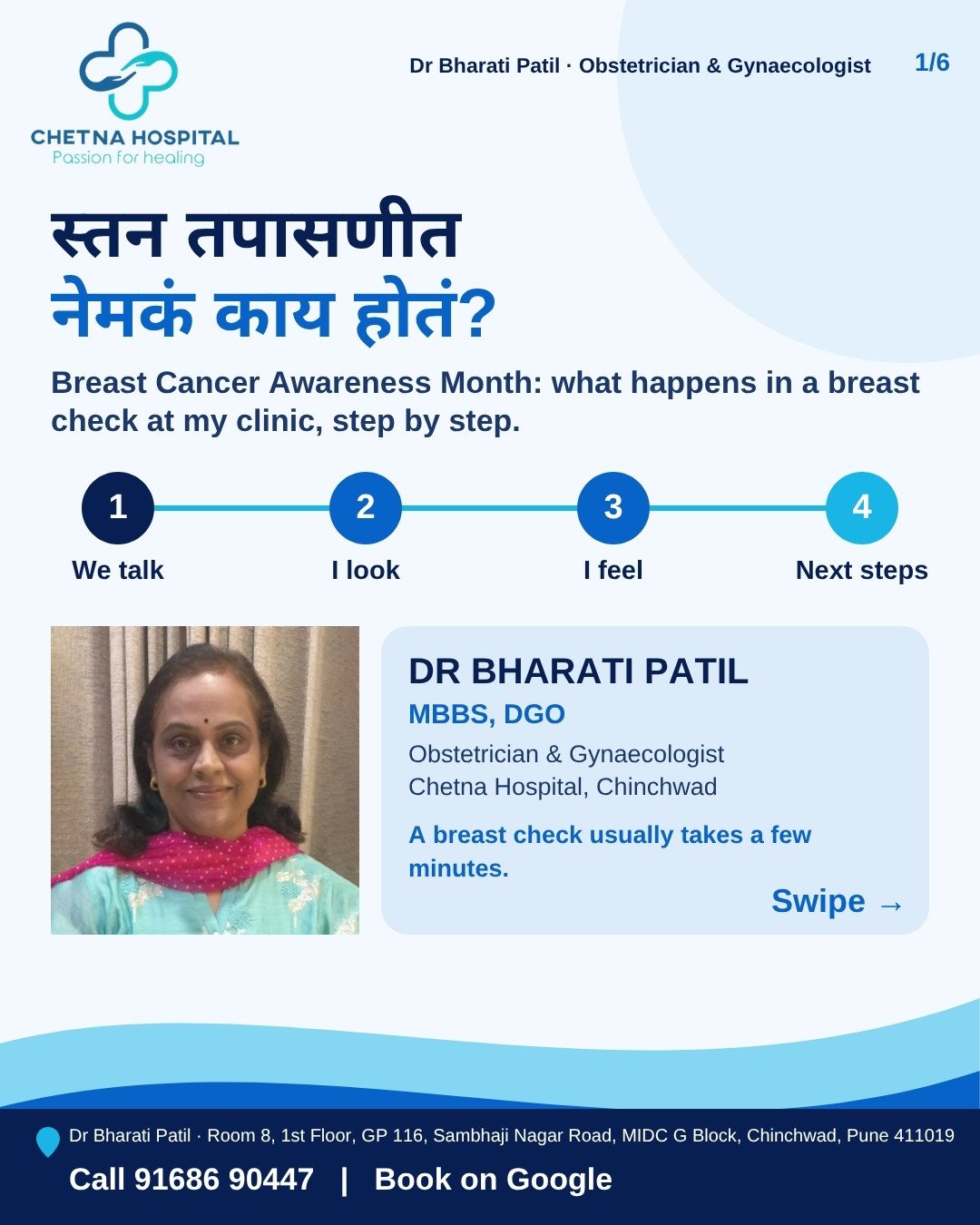
A breast check with a gynaecologist in Chinchwad, PCMC takes a few minutes: Dr Bharati Patil asks a few questions, looks at the breasts with you sitting up, then feels them gently with you lying down. See a doctor soon for a new lump, a change in breast shape or skin, a nipple change, or discharge from one nipple.
Dr Bharati Patil – Obstetrician & Gynaecologist in Chinchwad, PCMC
When a woman tells me she has never had a breast check, the reason is rarely that she thinks it doesn’t matter. More often she isn’t sure what will happen in the room, and that uncertainty is enough to keep putting it off. [Dr Bharati: confirm this matches what you hear in your OPD, or replace with your own words] So here is what a breast check at my clinic involves, one step at a time.
Why this is in the news now: October is Breast Cancer Awareness Month, and this year’s theme is “Every story is unique, every journey matters”, as The Hans India reported on 1 October 2026.
Before you come: timing and what to bring
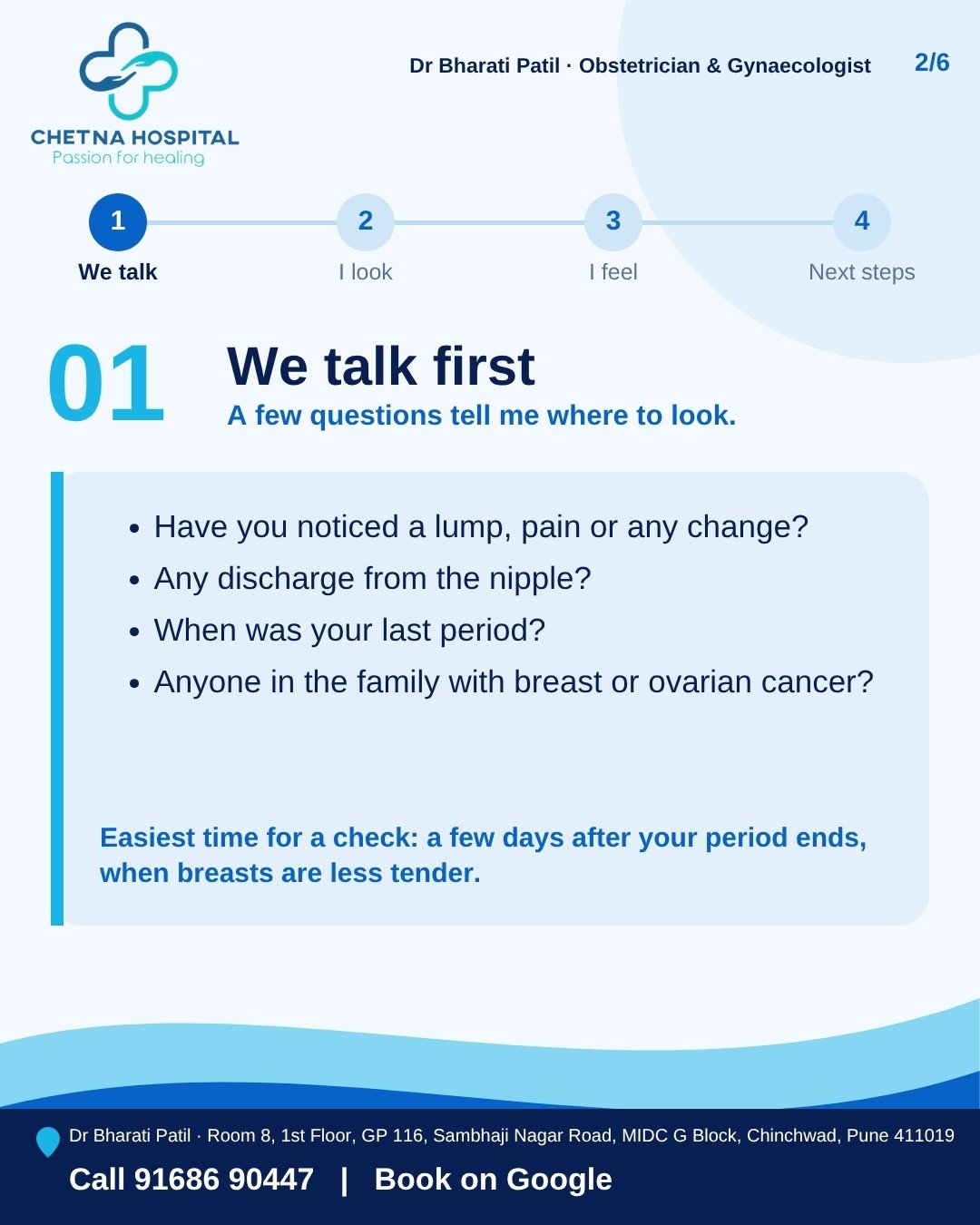
The easiest time for a breast check is a few days after your period ends, when the breasts are usually less tender and less lumpy. If you no longer have periods, any day is fine. If you have noticed a lump or a change, don’t wait for the “right” day; come in when you can.
Bring any earlier ultrasound or mammogram reports, a list of the medicines you take, and, if you know it, which relatives have had breast or ovarian cancer and at what age. Wear a two-piece outfit so that you only need to undress from the waist up.
The four steps of a breast check at my clinic
Step 1: We talk
Before any examination, I ask a few questions. Have you noticed a lump, pain or any change? Is there discharge from a nipple? When was your last period? Are you pregnant or breastfeeding? Has anyone in the family had breast or ovarian cancer? Your answers tell me where to pay closer attention.
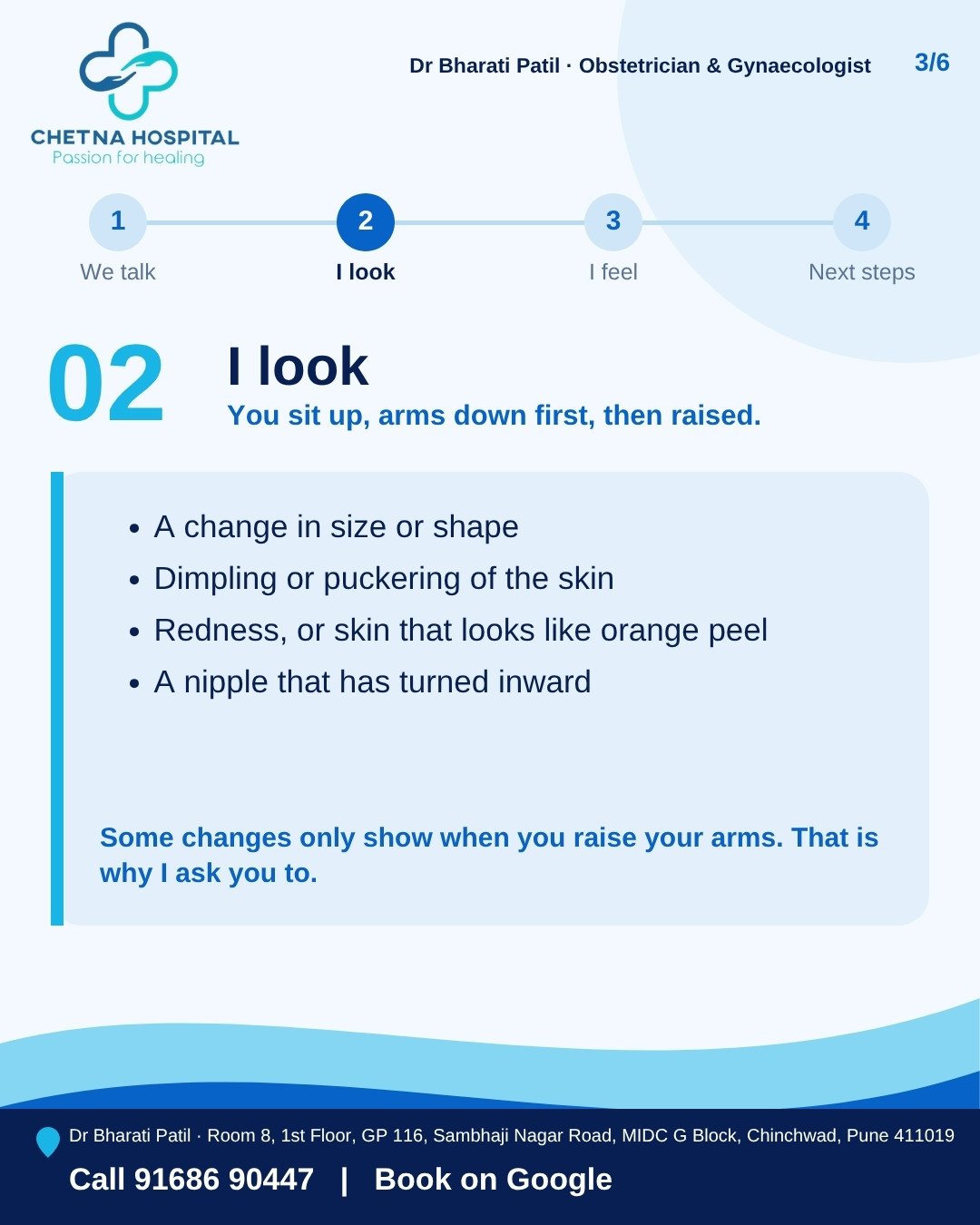
Step 2: I look
You sit up, first with your arms by your sides and then with your arms raised. I look for a change in the size or shape of a breast, dimpling or puckering of the skin, redness, skin that looks like orange peel, and a nipple that has turned inward. Some of these changes only show when the arms are raised, which is why I ask you to lift them.
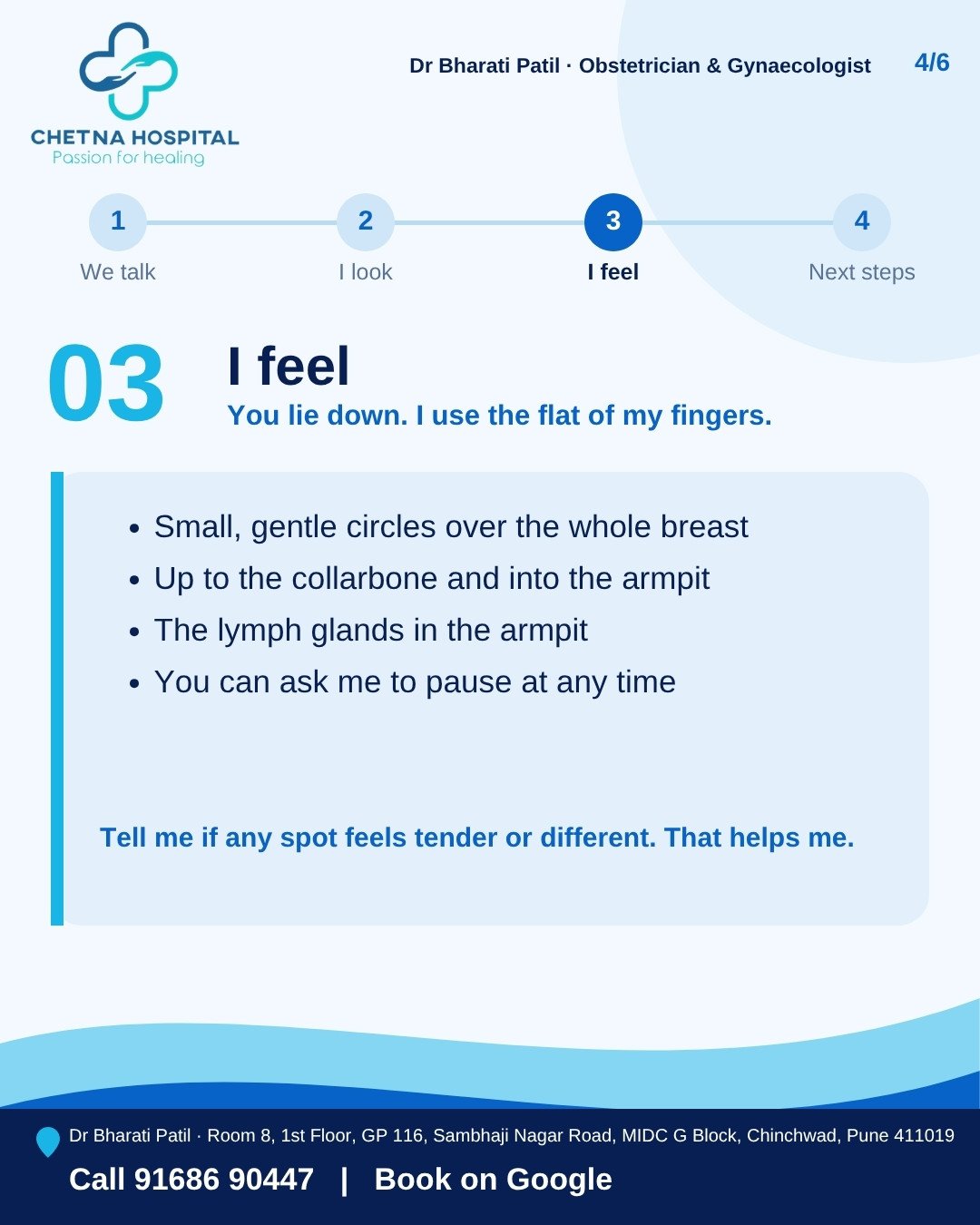
Step 3: I feel
You lie down with one arm behind your head. Using the flat of my fingers, I move in small, gentle circles over the whole breast, up to the collarbone and into the armpit, where the lymph glands sit. Tell me if any spot feels tender or different; that helps me. You can ask me to pause at any time.
Step 4: What happens next
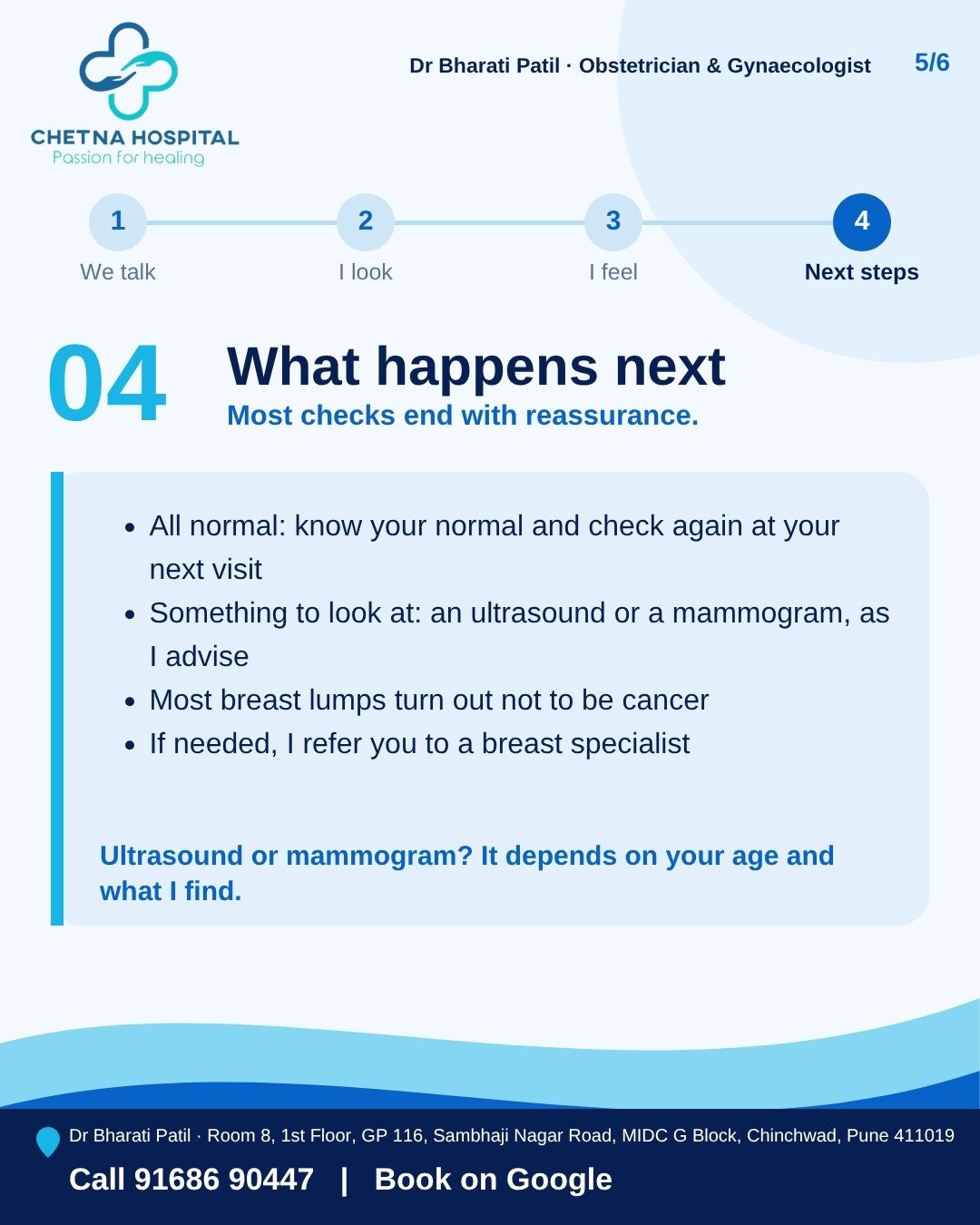
Most breast checks end with reassurance. If everything feels normal, we talk about knowing what your own breasts usually look and feel like, and when to come back. If I feel something I want a closer look at, I advise an imaging test. For younger women this is often an ultrasound, and for older women a mammogram, but the choice depends on your age and what I find. If needed, I refer you to a breast specialist.
The WHO notes that most breast lumps are not cancer. Every new lump still needs to be checked, because a cancer found when it is small is easier to treat.
Privacy and comfort in the room
A breast check is done with the door closed and only the area being examined uncovered. [Dr Bharati: confirm whether a female attendant is present in the room for every breast examination at your clinic] If you feel uncomfortable at any point, say so and we stop.
A pattern I see in women who delay
A pattern I notice: a woman feels a small lump, decides to “watch it for a few months”, and keeps checking it every few days at home. By the time she comes in, the worry has grown much faster than the lump. Very often the lump turns out to be harmless, and she tells me she wishes she had come sooner just to stop worrying.
Signs that should bring you in this week
- A new lump or thickening in the breast or armpit, even if it doesn’t hurt
- A change in the size or shape of one breast
- Dimpling, redness or other skin changes
- A nipple that has turned inward, or a change in the skin around it
- Discharge from one nipple, especially if it is bloody
These are the warning signs listed by the World Health Organization and the NHS.
Between visits: know your normal
You don’t need a fixed routine. Look at your breasts in the mirror now and then and notice how they usually feel, for example in the shower. If something is new for you, that is the reason to call, not a reason to wait. If you are in your forties and your cycles are changing, read our guide on early perimenopause symptoms; and if you have any bleeding after menopause, see bleeding after menopause: the one sign I never ignore.
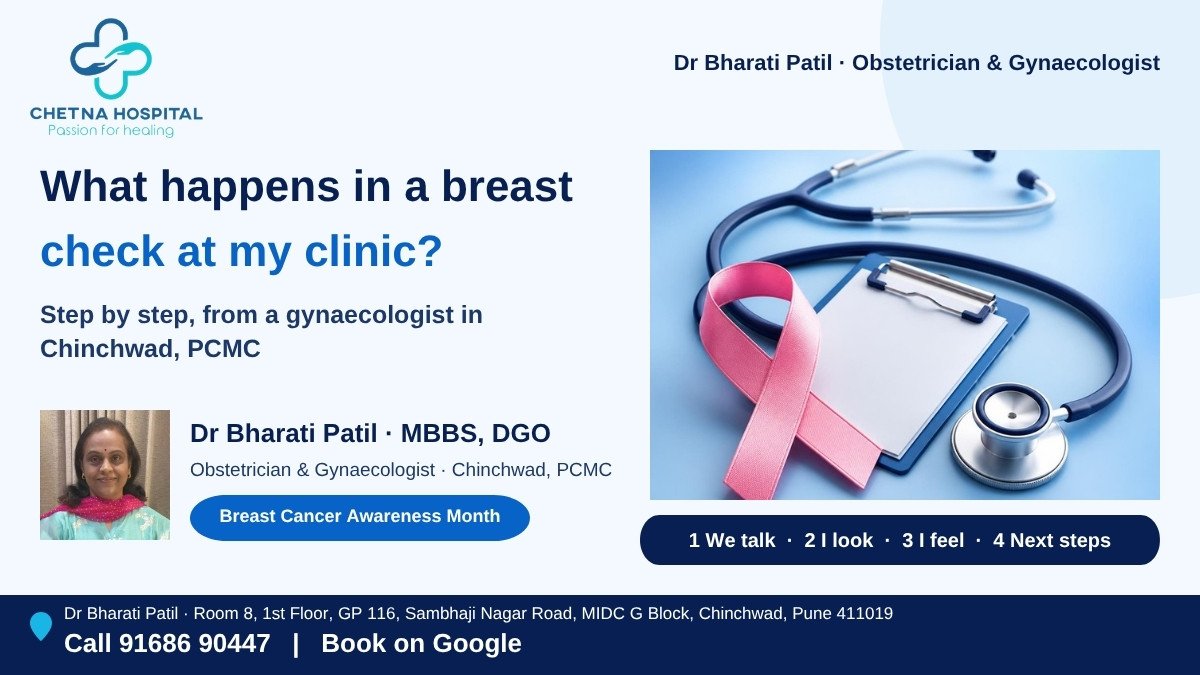
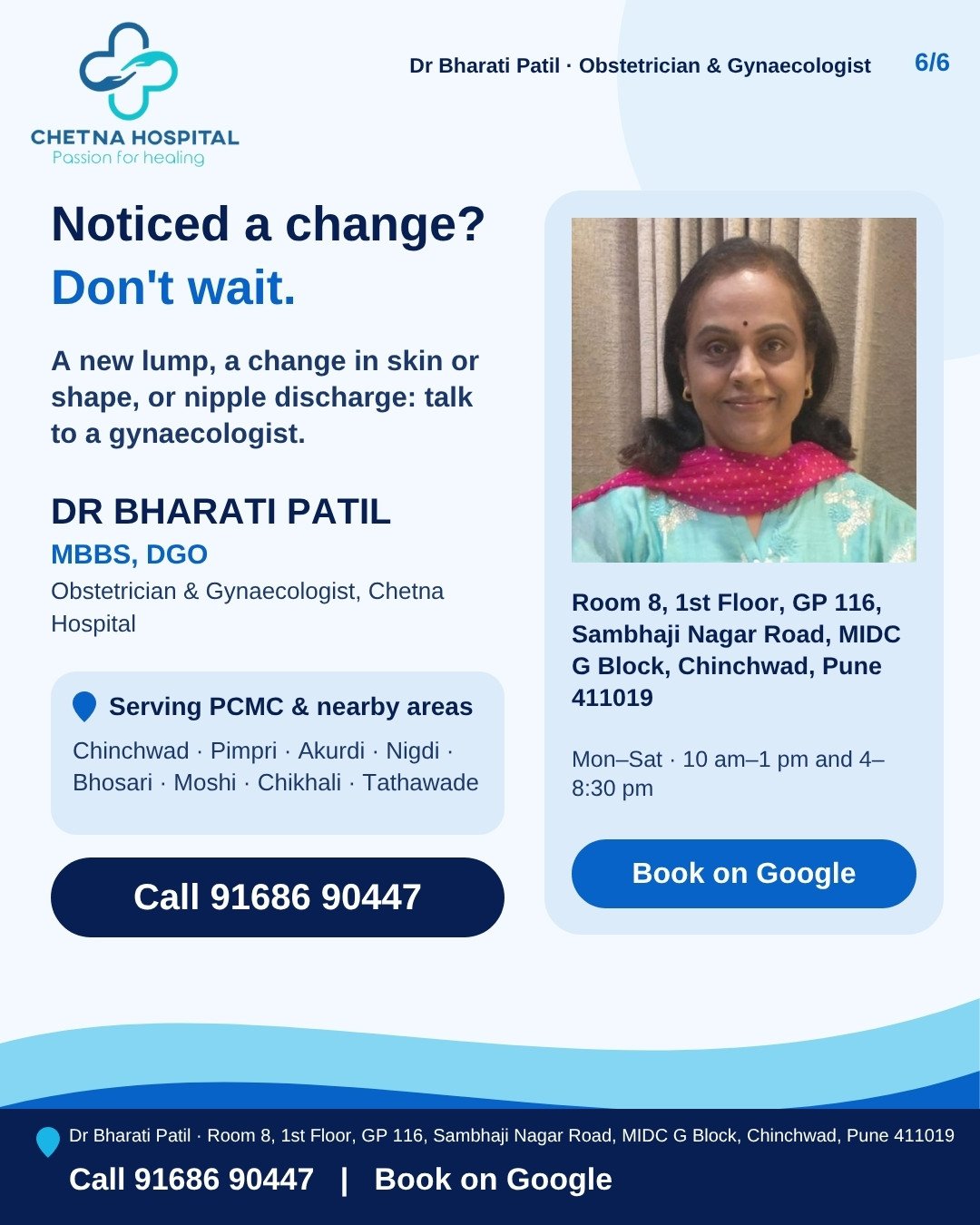
Swipe through the four steps
These are the slides from our Instagram post. Save them or send them to someone who has been putting off a check.
Where to get a breast check in Chinchwad, PCMC
Dr Bharati Patil consults at Room 8, First Floor, Plot No. GP 116, Sambhaji Nagar Road, near Rotary Club, G Block, MIDC, Chinchwad, Pune 411019 (Chetna Hospital). OPD hours are Monday to Saturday, 10 am to 1 pm and 4 pm to 8:30 pm. Women come to her from Chinchwad, Pimpri, Akurdi, Nigdi, Ravet, Wakad, Hinjewadi, Pimple Saudagar, Thergaon, Tathawade, Punawale, Moshi and Bhosari.
See our gynaecology and maternity services, laparoscopic and hysteroscopic surgery, our article on causes of uterine fibroids, and Dr Bharati Patil’s profile.
What women say about Dr Bharati Patil
Excerpts from Google reviews on Dr Bharati Patil’s profile:
⭐⭐⭐⭐⭐
“Special thanks to gynecologist Dr. Bharati Patil madam for her wonderful service and great advice.”
– Tejas P., Google review, August 2025
⭐⭐⭐⭐⭐
“Wonderful experience with Dr. Bharati Patil mam. Easily available on time… Hospital staff also caring.”
– Prasad I., Google review, February 2025
Read all reviews on Google → Individual experiences vary.
Questions women ask about breast checks
Where can I get a breast check by a lady gynaecologist in Chinchwad?
Dr Bharati Patil, Obstetrician and Gynaecologist (MBBS, DGO), examines breasts as part of her consultation at Room 8, First Floor, GP 116, Sambhaji Nagar Road, near Rotary Club, MIDC G Block, Chinchwad, Pune 411019. Call or WhatsApp 91686 90447 to book.
Does a breast examination hurt?
A breast examination is usually not painful. Breasts can feel tender just before a period, which is why a few days after your period ends is the easiest time. Tell the doctor if any spot is sore.
Is every breast lump cancer?
No. The WHO notes that most breast lumps are not cancer. A new lump still needs to be checked by a doctor, because a cancer found early is easier to treat.
Do I need a mammogram or an ultrasound?
It depends on your age and on what the doctor finds. Ultrasound is often used for younger women, and mammography is the usual screening test for older women. Your gynaecologist will advise which test suits you.
When should I see a doctor about a breast change?
See a doctor soon if you notice a new lump, a change in breast size or shape, dimpling or redness of the skin, a nipple that has turned inward, or discharge from one nipple.
Have a question about your health? Talk to a gynaecologist.
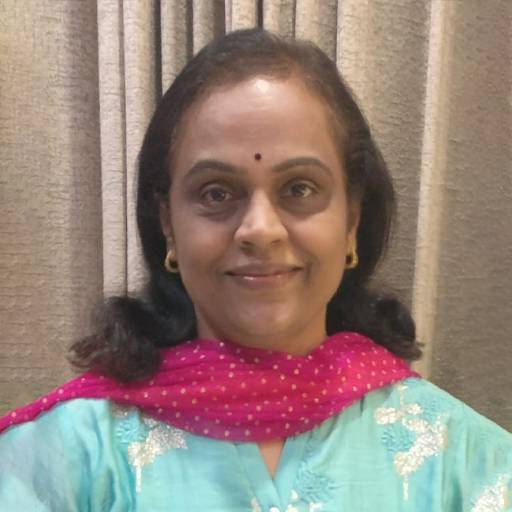
About the author: Dr Bharati Patil
Consultant Obstetrician & Gynaecologist
MBBS, DGO (JJ Hospital, Mumbai)
Pregnancy care, normal and caesarean delivery, laparoscopic and hysteroscopic gynaecology surgery at Chetna Hospital, Chinchwad. View full profile
Medically reviewed by Dr Bharati Patil. Last updated 16 October 2026.
Sources
- World Health Organization. Breast cancer fact sheet.
- NHS. Breast lumps.
- The Hans India. Breast Cancer Awareness Month 2026: theme, global statistics and warning signs (1 October 2026).
This article is general health information and does not replace a consultation. Which tests you need is decided after an examination.