
Quick Answer
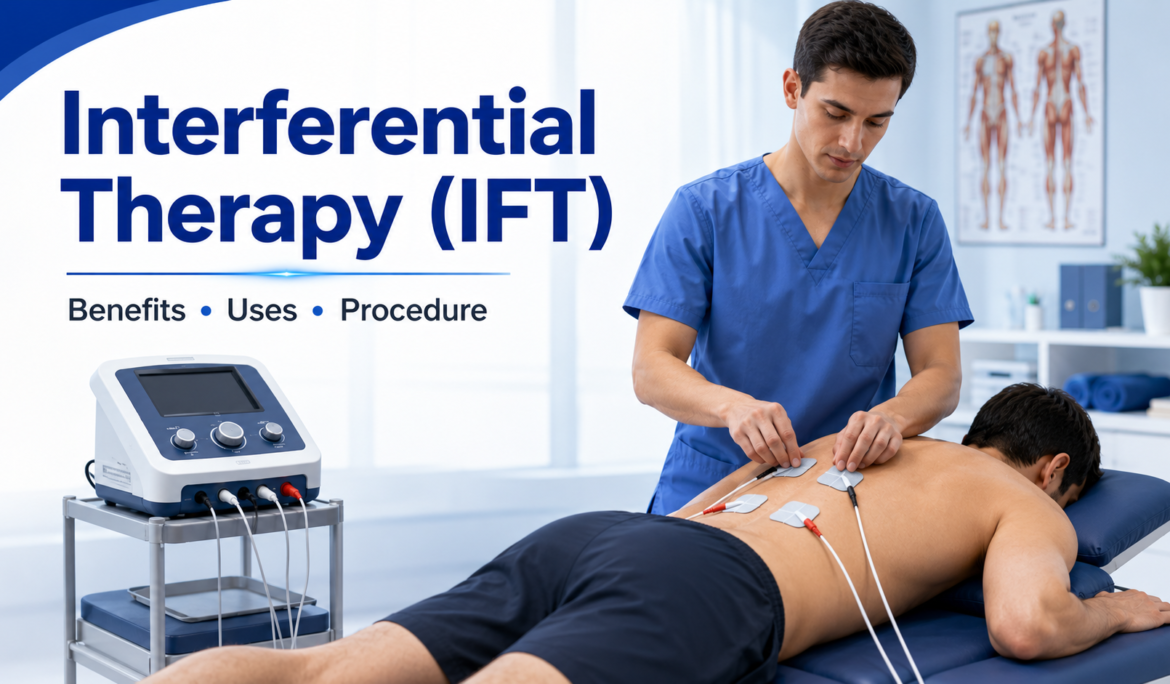
Interferential Therapy (IFT) is a non-invasive physiotherapy modality that uses controlled electrical currents through electrodes placed on the skin. Physiotherapists may use IFT as part of a rehabilitation program to help manage certain types of pain and muscle discomfort. Depending on the patient’s condition, it may be combined with therapeutic exercises, manual therapy, stretching and other rehabilitation techniques.
At Next Gen Rehab & Physi Centre, at Chetna Hospital – Best Multispeciality Hospital in Pimpri Chinchwad, Pune, a physiotherapist may recommend IFT after assessing the patient’s condition and determining whether the treatment is appropriate.
What Is Interferential Therapy (IFT)?
Interferential Therapy, commonly known as IFT, is an electrotherapy modality used by physiotherapists as part of pain management and rehabilitation.
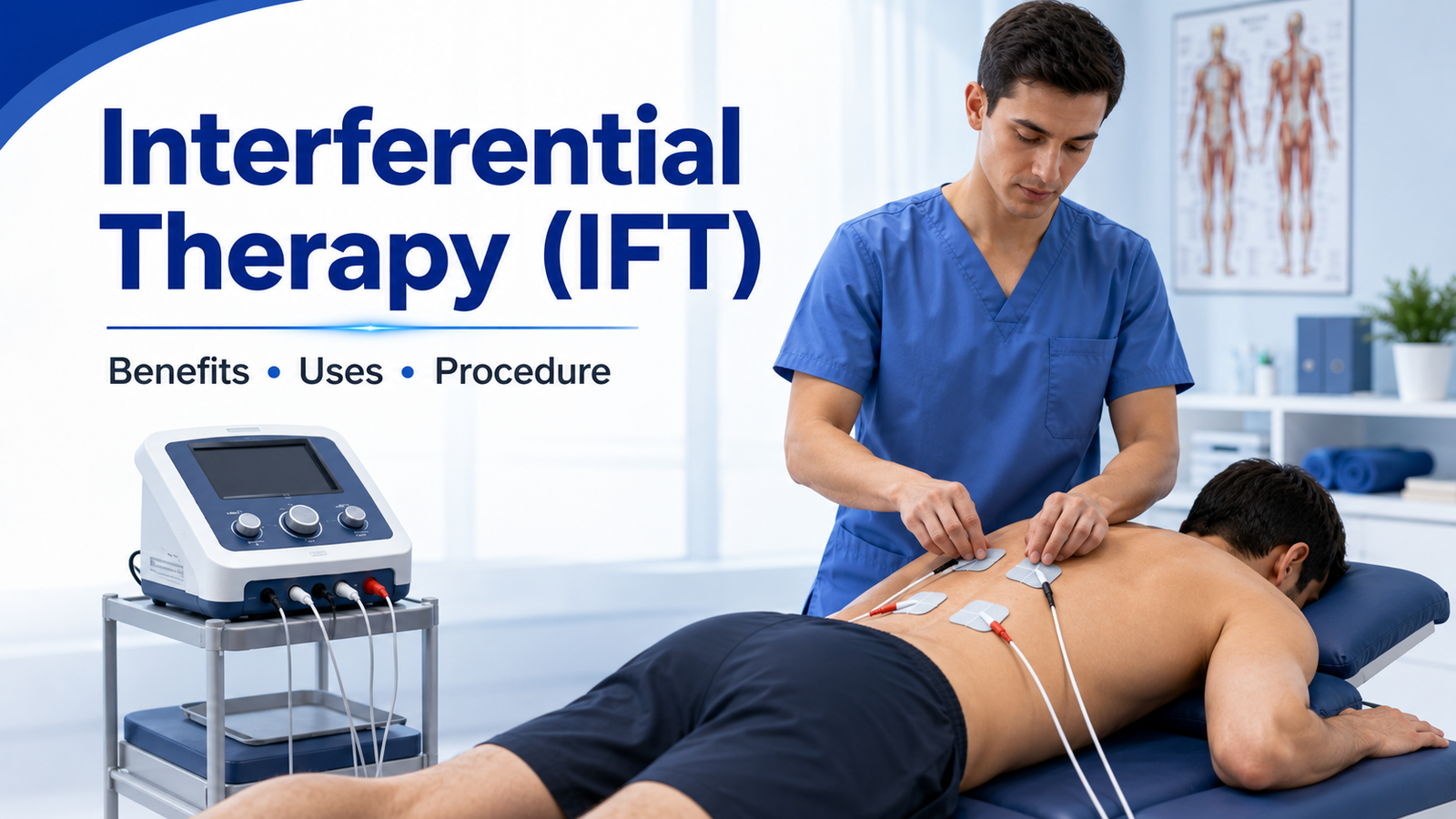
During an IFT session, the physiotherapist places electrodes on the skin around the treatment area.. The physiotherapy machine delivers controlled electrical currents through the electrodes. Treatment settings are adjusted according to the patient’s symptoms, treatment area and rehabilitation goals.
IFT is generally used as a supportive physiotherapy modality rather than as a standalone treatment. A physiotherapist may combine it with therapeutic exercises, manual therapy, mobility exercises, stretching or other rehabilitation techniques.
The effectiveness of IFT can vary depending on the condition, treatment parameters and individual patient factors. Clinical research suggests that interferential current can provide pain relief in some musculoskeletal conditions, although it should be considered within an overall rehabilitation program.
How Does Interferential Therapy Work?
IFT uses electrical stimulation delivered through surface electrodes.
Step 1: Physiotherapy Assessment
Before treatment, the physiotherapist evaluates your symptoms, movement, pain location, medical history, and functional limitations.
Step 2: Treatment Area Identification
The physiotherapist identifies the area where IFT may be appropriate based on the clinical assessment.
Step 3: Electrode Placement
Small electrodes are placed on the skin around the treatment area.
Step 4: Current Application
The IFT device delivers controlled electrical currents through the electrodes.
Step 5: Intensity Adjustment
The intensity and treatment settings are adjusted according to the patient’s condition and comfort.
Step 6: Monitoring
The physiotherapist monitors the patient throughout the session and adjusts the treatment if required.
What Are the Benefits of Interferential Therapy?
IFT may offer several potential benefits when it is appropriately selected as part of physiotherapy.
1. Pain Management
IFT is commonly used to help manage certain types of musculoskeletal pain.
It may be considered for pain involving areas such as:
- Lower back
- Neck
- Shoulder
- Knee
- Hip
- Muscles and soft tissues
However, the cause of pain should be assessed before selecting a treatment modality.
2. May Help With Muscle Discomfort
IFT may be used when muscle discomfort occurs along with certain musculoskeletal conditions.
The treatment parameters are selected according to the patient’s symptoms and physiotherapy assessment.
3. May Support Exercise Participation
Pain and discomfort can sometimes make therapeutic exercises difficult.
When appropriate, IFT may be incorporated into a rehabilitation plan to help patients participate more comfortably in their prescribed exercises.
4. Non-Invasive Treatment
IFT is delivered externally through electrodes placed on the skin and does not require injections or surgery.
5. Can Be Combined With Other Physiotherapy Techniques
IFT may be combined with:
- Therapeutic exercises
- Manual therapy
- Stretching
- Mobility exercises
- Strengthening exercises
- TENS
- Ultrasound therapy
- Heat or cold therapy
- Functional rehabilitation
The combination depends on the patient’s diagnosis and rehabilitation goals.
What Conditions May Be Treated With IFT?
IFT may be considered as part of physiotherapy for selected musculoskeletal and rehabilitation conditions.
Back Pain
IFT may be used as an adjunct to physiotherapy for certain types of lower back pain.
However, persistent or severe back pain should be medically evaluated to identify the underlying cause.
Neck Pain
People with some forms of neck pain or muscular discomfort may receive electrotherapy as part of a broader physiotherapy program.
Knee Pain
IFT may sometimes be included in rehabilitation for knee-related pain, depending on the underlying condition.
Shoulder Pain
For selected shoulder conditions, IFT may be used alongside mobility, strengthening and other rehabilitation techniques.
Sports Injuries
Sports injuries may require a combination of pain management, mobility restoration, strengthening and gradual return-to-sport training. IFT may be used as one component when appropriate.
Postoperative Rehabilitation
Following certain orthopedic procedures, physiotherapy may include multiple rehabilitation techniques. IFT may be considered when appropriate and when cleared by the treating medical team.
IFT Treatment Procedure: What Happens During a Session?
Understanding the procedure can help patients feel more comfortable before their first session.
Initial Assessment
The physiotherapist begins by assessing your symptoms and functional limitations.
They may ask about:
- Where you experience pain
- How long you have had the symptoms
- Previous injuries
- Medical or surgical history
- Activities that increase or decrease symptoms
- Your current mobility and functional limitations
Preparing the Treatment Area
The skin should be clean and free from materials that could interfere with electrode contact.
Electrode Placement

The physiotherapist places the electrodes on or around the treatment area according to the treatment plan.
Starting the IFT Machine
The machine is switched on, and the appropriate settings are selected.
You may feel a mild tingling or stimulating sensation.
Adjusting the Intensity
The intensity should be adjusted to an appropriate and comfortable level.
Inform the physiotherapist immediately if you experience significant discomfort, burning, pain or an unusual sensation.
Completion of Treatment
Once the treatment is complete, the electrodes are removed, and the skin is checked.
Your physiotherapist may then prescribe exercises or other rehabilitation techniques.
How Long Does an IFT Session Take?
The duration of IFT treatment can vary depending on the patient’s condition, treatment area, and overall physiotherapy plan.
Your physiotherapist determines the appropriate treatment duration and frequency after assessment.
IFT should not be used for a fixed number of sessions simply because someone else received the same treatment. The treatment plan should be individualized.
Is Interferential Therapy Painful?
IFT is generally designed to provide a comfortable electrical stimulation sensation.
Patients may experience:
- Mild tingling
- Pulsing sensation
- Gentle stimulation
It should not normally cause significant pain.
If you experience burning, sharp pain or excessive discomfort, inform your physiotherapist immediately so the treatment can be reassessed.
Is IFT Safe?
IFT can be appropriate for many patients when it is used correctly by a trained physiotherapist.
However, electrotherapy is not suitable for everyone.
A physiotherapist should review your medical history and determine whether IFT is appropriate before treatment.
For chronic primary pain, NICE guidance advises against offering interferential therapy because of insufficient evidence of benefit. Treatment decisions should therefore be individualized according to the patient’s diagnosis and physiotherapy assessment
Who Should Avoid or Use Caution With IFT?
IFT may not be appropriate in certain situations.
Serious situations include:
- Implanted electronic devices such as certain pacemakers
- Certain cardiac conditions
- Application over areas with impaired sensation
- Open or damaged skin at the treatment site
- Certain areas during pregnancy
- Active infection in the treatment area
- Certain neurological or vascular conditions
This list is not exhaustive.
Do not start IFT on your own. A qualified physiotherapist should determine whether it is suitable for you.
If you have an implanted medical device, are pregnant, have reduced sensation, or have another significant medical condition, inform your physiotherapist before treatment.
IFT vs TENS: What Is the Difference?
IFT and TENS are both forms of electrical stimulation used in physiotherapy, but they are not exactly the same.
Interferential Therapy (IFT)
IFT uses interfering electrical currents delivered through electrodes and is commonly used as an adjunct for pain management and rehabilitation.
Transcutaneous Electrical Nerve Stimulation (TENS)
TENS is another electrical stimulation technique commonly used for pain relief.
Which One Is Better?
There is no single treatment that is best for everyone.
The appropriate modality depends on:
- Diagnosis
- Pain type
- Treatment area
- Medical history
- Functional limitations
- Physiotherapy assessment
Your physiotherapist can determine whether IFT, TENS or another treatment approach is appropriate.
IFT Should Be Part of a Complete Physiotherapy Program
Electrotherapy alone may not address the underlying factors contributing to pain or movement problems.
A comprehensive physiotherapy program may include:
Therapeutic Exercise
Exercises can help improve:
- Strength
- Flexibility
- Balance
- Mobility
- Endurance
- Functional movement
Manual Therapy
Depending on the condition, physiotherapists may use techniques such as:
- Joint mobilization
- Soft-tissue techniques
- Mulligan techniques
- Maitland techniques
- Kaltenborn techniques
Rehabilitation Training
Functional rehabilitation may focus on restoring the activities that matter most to the patient.
Education
Patients may also receive guidance regarding posture, movement, activity modification and home exercises.
Physiotherapy and Rehabilitation Services at Chetna Hospital
Next Gen Rehab & Physi Centre at Chetna Hospital – Best Multispeciality Hospital in Pimpri Chinchwad, Pune provides physiotherapy and rehabilitation services designed around individual patient needs.
Available pain-management and physiotherapy modalities include:
- Interferential Therapy (IFT)
- Short Wave Diathermy (SWD)
- Long Wave Diathermy (LWD)
- Ultrasound Therapy
- Galvanic and Faradic Stimulation
- Russian Current
- Continuous Passive Movement (CPM)
- TENS
- Cervical Traction
- Lumbar Traction
- Infrared Ray Therapy
- Cryotherapy
- Dry Needling
- Electrical Muscle Stimulation
Rehabilitation may also incorporate therapeutic exercises and equipment such as Theraband exercises, gait training, stability trainers, balance balls, treadmill, cross trainer and stationary cycles.
Looking for advanced IFT treatment or physiotherapy near Thermax Chowk, Akurdi, Nigdi, or Sambhajinagar? Visit Chetna Hospital’s specialized rehabilitation unit in Chinchwad, Pune.
Physiotherapy Services at Next Gen Rehab & Physi Centre
The rehabilitation centre provides support for different areas of physiotherapy.
Orthopedic Rehabilitation
Rehabilitation programs may help patients recovering from orthopedic surgery, fractures, injuries and musculoskeletal conditions.
Neurological Rehabilitation
Physiotherapy may be used as part of rehabilitation for selected neurological conditions, with treatment tailored to the patient’s functional needs.
Sports Injury Rehabilitation
Sports rehabilitation focuses on restoring movement, strength and function while supporting a safe return to activity.
Postoperative Rehabilitation
Patients recovering from selected orthopedic procedures may require structured rehabilitation to regain mobility, strength and independence.
IFT Treatment in Chinchwad, Pimpri-Chinchwad, Pune
If you are searching for Interferential Therapy (IFT) in Chinchwad, Pimpri-Chinchwad or PCMC, you can consult the physiotherapy team at Next Gen Rehab & Physi Centre, Chetna Hospital.
Location
Chetna Hospital – Best Multispeciality Hospital in Pimpri Chinchwad, Pune
Google map location – Chetna Hospital
Room 1, Chetna Hospital,
Nigdi Bhosari Road,
Near HP Petrol Pump,
Sambhajinagar, Chinchwad,
Pimpri-Chinchwad, Maharashtra – 411019.
The centre is accessible for patients from Chinchwad, Pimpri, Nigdi, Akurdi, Bhosari and nearby PCMC areas.
Looking for advanced IFT treatment or physiotherapy near Thermax Chowk, Akurdi, Nigdi, or Sambhajinagar? Visit Chetna Hospital’s specialized rehabilitation unit in Chinchwad, Pune.
Contact
Phone: +91 91686 90442
[Book a Physiotherapy Session at Chetna Hospital – Call 091586 81123]
Before starting IFT, a physiotherapy assessment is recommended to determine whether the treatment is appropriate for your condition.
Physiotherapy Team at Chetna Hospital
Dr. Shruti Gupta – Physiotherapist
Dr. Shruti Gupta is a dedicated physiotherapist associated with Chetna Hospital and provides physiotherapy and rehabilitation care based on individual patient requirements.
Dr. Sanskruti Kale – Physiotherapist
Dr. Sanskruti Kale is a skilled physiotherapist associated with Chetna Hospital and provides patient-focused physiotherapy and rehabilitation support.
Why Choose Next Gen Rehab & Physi Centre at Chetna Hospital?
Experienced Physiotherapy Care
Treatment is planned according to individual symptoms, functional limitations and rehabilitation goals.
Personalized Treatment Plans
Not every patient requires the same physiotherapy modality. Treatment is selected according to the patient’s assessment.
Multiple Rehabilitation Techniques
IFT can be combined with therapeutic exercise, manual therapy, mobility training and other appropriate rehabilitation techniques.
Multispeciality Hospital Environment
Chetna Hospital provides access to multiple medical specialties, which can be useful when a patient’s rehabilitation requires coordination with other healthcare professionals.
Patient-Centered Rehabilitation
The focus is on helping patients improve movement, function and independence through an individualized rehabilitation plan.
When Should You See a Physiotherapist?
Consider consulting a physiotherapist if you have:
- Persistent muscle or joint pain
- Difficulty moving a joint
- Stiffness
- Reduced strength
- Difficulty walking
- Sports-related injury
- Postoperative mobility problems
- Recurrent musculoskeletal discomfort
- Difficulty returning to normal activities
If pain is severe, sudden, associated with major trauma, neurological symptoms or other concerning symptoms, seek appropriate medical evaluation rather than relying only on electrotherapy.
Frequently Asked Questions About Interferential Therapy (IFT)
IFT, or Interferential Therapy, is a non-invasive electrotherapy modality that uses controlled electrical currents delivered through electrodes placed on the skin. It may be used as part of physiotherapy for pain management and rehabilitation.
IFT may help manage certain types of pain and muscle discomfort. It can also be used as an adjunct to a broader physiotherapy rehabilitation program that may include exercises, manual therapy and mobility training.
IFT usually produces a mild tingling or stimulating sensation. It should not normally cause significant pain. Inform your physiotherapist if you experience burning, sharp pain or excessive discomfort during treatment.
The duration of an IFT session varies depending on the patient’s condition, treatment area and overall rehabilitation plan. Your physiotherapist determines the appropriate treatment duration.
IFT should not be considered a guaranteed cure for back pain. Back pain can have different causes, and treatment should be based on an appropriate assessment. Exercise, education, manual therapy and other rehabilitation approaches may also be required.
Neither treatment is universally better. IFT and TENS are different electrical stimulation techniques, and the appropriate option depends on the patient’s condition, symptoms and physiotherapy assessment.
IFT may sometimes be included as part of postoperative rehabilitation. However, its use depends on the type of surgery, healing stage and medical advice. Your physiotherapist should determine whether IFT is appropriate.
IFT may not be suitable for some people with implanted electronic devices, certain medical conditions, impaired sensation, skin problems or other contraindications. A physiotherapy assessment is important before starting treatment.
IFT may be available at Next Gen Rehab & Physi Centre at Chetna Hospital – Best Multispeciality Hospital in Pimpri Chinchwad, Pune, subject to physiotherapy assessment and treatment suitability.
Address:
Room 1, Chetna Hospital, Nigdi Bhosari Road,
near HP Petrol Pump, Sambhajinagar, Chinchwad,
Pimpri-Chinchwad, Maharashtra 411019.
Phone: +91 91686 90442
Book a Physiotherapy Assessment at Chetna Hospital
If you are experiencing pain, stiffness, reduced mobility or difficulty returning to normal activities, a proper physiotherapy assessment can help identify an appropriate treatment approach.
Next Gen Rehab & Physi Centre
Chetna Hospital – Best Multispeciality Hospital in Pimpri Chinchwad, Pune
Address: Room 1, Chetna Hospital, Nigdi Bhosari Road, near HP Petrol Pump, Sambhajinagar, Chinchwad, Pimpri-Chinchwad, Maharashtra 411019.
Phone: +91 91686 90442
Your physiotherapist can assess your condition and determine whether IFT or another rehabilitation approach is appropriate for you.