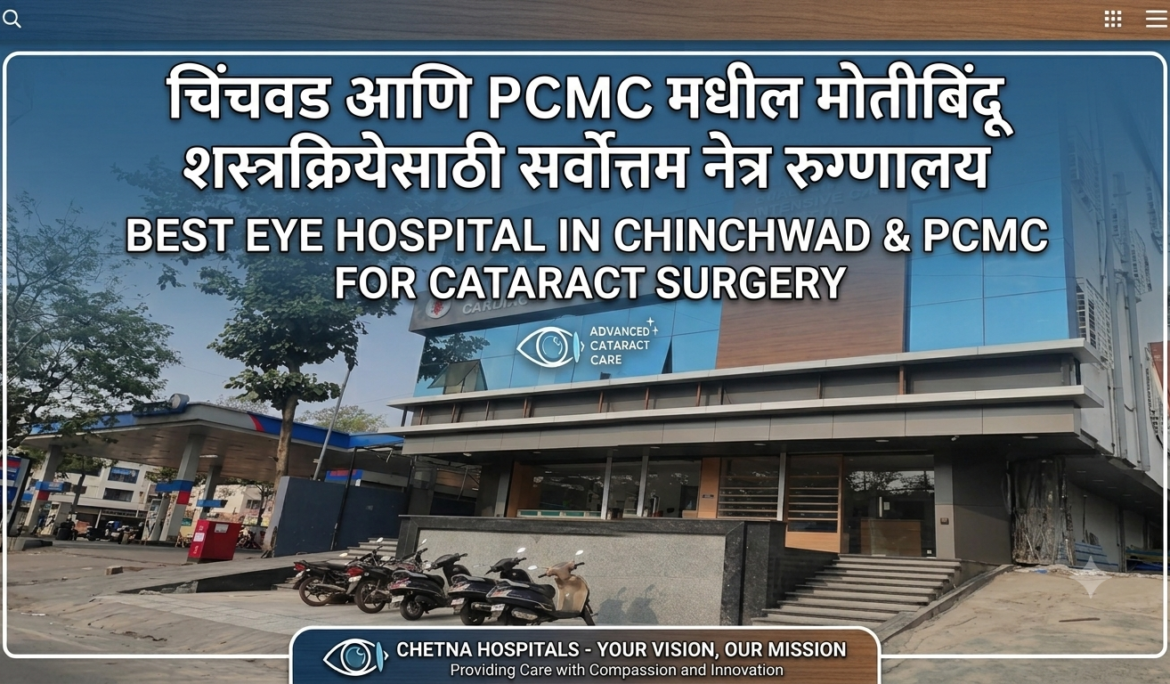
If cataracts are making your vision blurry, causing glare while driving at night, or making it difficult to read, work, or recognise faces clearly, choosing the right eye hospital in Chinchwad for cataract surgery is an important decision.
For patients in Chinchwad, Pimpri-Chinchwad (PCMC), and nearby areas of Pune, cataract care should involve more than simply selecting a hospital. A proper evaluation by an experienced ophthalmologist, accurate eye measurements, appropriate intraocular lens (IOL) selection, surgical planning, and follow-up care are all important parts of cataract treatment.
At Chetna Hospital, Chinchwad, patients can consult Dr. Rachana Tiwari, Consultant Ophthalmologist and Phaco-Refractive Surgeon, for comprehensive eye evaluation and cataract-related care. Her profile lists qualifications including MBBS, MS Ophthalmology, FCRS and ICO (UK), with expertise including phaco-refractive eye surgery.
If you are searching for the best eye hospital in Chinchwad for cataract surgery, this guide explains what to look for, when cataract surgery may be recommended, what happens during treatment, and how to choose an eye specialist for your needs.
Why Choose Chetna Hospital for Cataract Surgery in Chinchwad?
Choosing a cataract hospital is not only about the procedure itself. Patients should consider the ophthalmologist’s qualifications, surgical expertise, diagnostic evaluation, lens selection, hospital facilities, safety protocols, and postoperative follow-up.
At Chetna Hospital, patients can access ophthalmology services under the care of Dr. Rachana Tiwari, whose listed areas of expertise include phaco-refractive eye surgery, glaucoma, dry eye and diabetic retinopathy management.
Key reasons patients may consider Chetna Hospital for cataract care include:
- Consultation with an experienced ophthalmologist
- Cataract evaluation and diagnosis
- Phaco-refractive eye surgery expertise
- Comprehensive ophthalmology services
- Evaluation of co-existing eye conditions
- Individualised intraocular lens selection
- Preoperative eye measurements
- Postoperative follow-up
- Convenient location for patients from Chinchwad and the wider PCMC region
The hospital’s ophthalmology service is relevant for patients from areas such as Chinchwad, Pimpri, Akurdi, Nigdi, Ravet, Bhosari, Wakad, Pimple Saudagar and other parts of Pune.
What Is a Cataract?
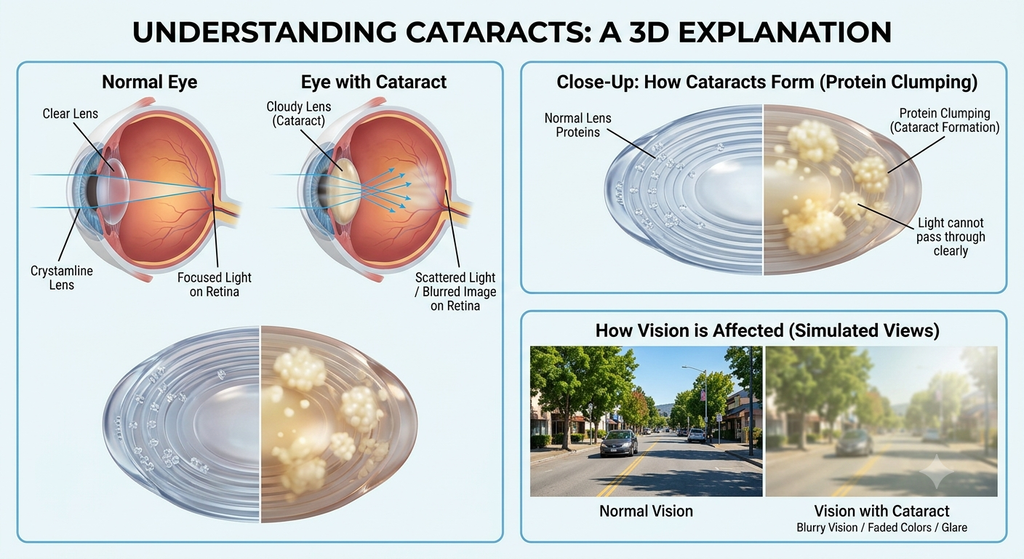
A cataract occurs when the natural lens inside the eye becomes cloudy. Instead of light passing clearly through the lens and producing a sharp image, the cloudy lens can gradually reduce the quality of vision.
Common symptoms include:
- Blurred or cloudy vision
- Difficulty reading
- Difficulty seeing road signs
- Glare from headlights at night
- Increased sensitivity to bright light
- Faded or less vivid colours
- Frequent changes in spectacle prescription
- Difficulty recognising faces
- Poor night vision
- Difficulty performing everyday activities
Cataracts commonly develop with ageing, but they can also be associated with factors such as previous eye injury or surgery, prolonged steroid use and certain medical conditions.
When Should You See a Cataract Specialist?
A cataract does not necessarily mean that surgery is immediately required.
An ophthalmologist generally evaluates how significantly the cataract is affecting your vision and daily activities before recommending treatment. Cataract surgery may be considered when reduced vision begins interfering with activities such as reading, driving, working, watching television or moving around safely.
You should consider an eye examination if you notice:
Blurred vision + increasing glare + difficulty reading + worsening night vision
These symptoms can occur with cataracts, although other eye conditions can cause similar problems. A comprehensive eye examination is therefore important.
What Is Cataract Surgery?
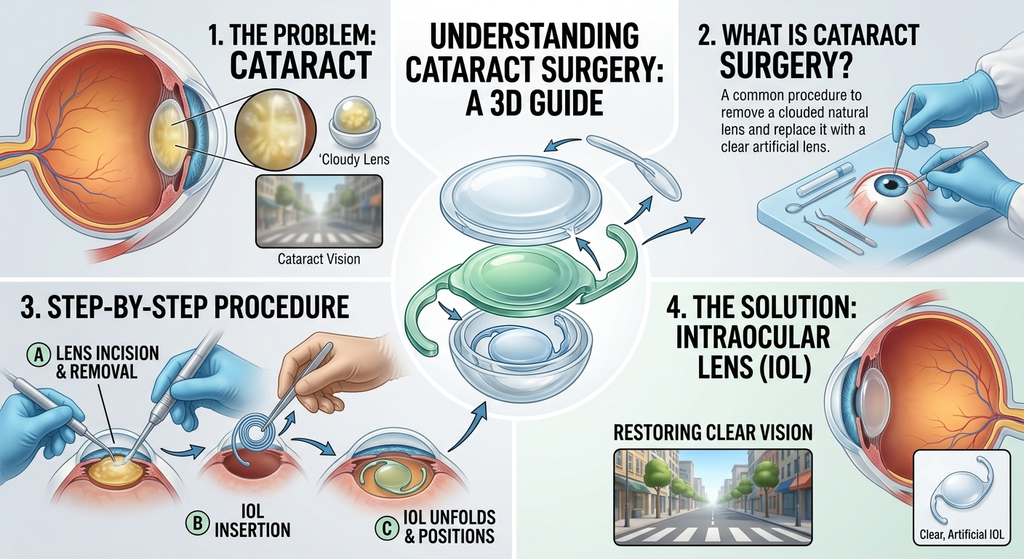
Cataract surgery involves removing the cloudy natural lens and replacing it with an artificial intraocular lens (IOL).
Modern cataract surgery commonly uses small-incision techniques. During surgery, the cloudy lens is broken into smaller fragments and removed, after which an artificial lens is placed inside the eye. The procedure is commonly performed using local anaesthesia, and many patients can return home on the same day depending on their individual circumstances.
The exact surgical approach and IOL choice should be determined after an ophthalmologist examines the patient’s eyes and discusses their visual requirements.
What Is Phaco Cataract Surgery?
Phacoemulsification, commonly called phaco cataract surgery, is a modern cataract surgery technique in which ultrasound energy is used to break up the cloudy natural lens so that it can be removed through a small incision.
An artificial intraocular lens is then positioned inside the eye.
The suitability of a particular surgical technique depends on factors such as:
- Cataract density
- Corneal health
- Retina health
- Eye measurements
- Existing eye conditions
- Previous eye surgery
- Patient’s visual requirements
Therefore, the best cataract treatment is not necessarily the same for every patient.
How Is Cataract Surgery Performed?
Although the exact process varies between patients, cataract surgery generally involves several stages.
1. Comprehensive Eye Examination
The ophthalmologist examines the eyes and assesses the cataract and overall eye health.
2. Biometry and Eye Measurements
Accurate measurements help the surgeon determine the appropriate intraocular lens power.
3. Discussion of IOL Options
The ophthalmologist discusses suitable lens options based on the patient’s eye health, lifestyle and visual expectations.
4. Surgical Procedure
The cloudy natural lens is removed and replaced with an artificial intraocular lens.
5. Postoperative Medication
Eye drops and postoperative instructions are provided according to the surgeon’s treatment plan.
6. Follow-Up
Follow-up examinations allow the ophthalmologist to monitor healing and visual recovery.
Cataract surgery is generally a short procedure, although the total time spent at the hospital can be longer because of preparation and postoperative observation. The NHS notes that the operation itself commonly takes around 20–45 minutes.
How to Choose the Best Eye Hospital in Chinchwad for Cataract Surgery
Searching Google for “best eye hospital in Chinchwad for cataract surgery” can produce many options. Instead of selecting a hospital only because of advertising or rankings, consider these factors.
1. Experienced Ophthalmologist
Look for an ophthalmologist with appropriate qualifications and experience in cataract and comprehensive eye care.
2. Proper Preoperative Evaluation
Cataract surgery should begin with a detailed assessment of the eye rather than simply scheduling an operation.
3. Accurate IOL Calculation
Correct eye measurements and appropriate IOL selection are important components of cataract surgery planning.
4. Evaluation of Other Eye Diseases
Conditions such as glaucoma, diabetic retinopathy, corneal disease or retinal problems can affect vision and should be evaluated when appropriate.
5. Clear Explanation of Treatment
A good cataract consultation should explain the diagnosis, treatment options, expected benefits, limitations and potential risks.
6. Postoperative Follow-Up
Cataract care does not end when surgery is completed. Follow-up helps the ophthalmologist monitor healing and visual recovery.
7. Convenient Local Access
For patients living in PCMC, choosing an eye hospital in or near Chinchwad can make consultations and postoperative follow-ups easier.
Why Cataract Surgery May Improve Everyday Life
Cataracts can gradually interfere with simple activities.
A person may find it harder to:
- Read newspapers or books
- Use a mobile phone
- Recognise people from a distance
- Watch television comfortably
- Drive at night
- Walk confidently in unfamiliar places
- Work on detailed tasks
- Manage household activities
For suitable patients, cataract surgery can improve vision and make daily activities easier.
However, the expected visual outcome depends on several factors, including the health of the retina, optic nerve, cornea and other parts of the eye. Cataract removal itself does not automatically correct every cause of reduced vision.
Cataract Surgery for Patients With Diabetes
Patients with diabetes require particular attention to eye health because diabetes can affect the retina.
Before cataract surgery, the ophthalmologist may evaluate the retina and other structures of the eye, particularly when there is a history of diabetic eye disease.
Chetna Hospital’s ophthalmology profile lists diabetic retinopathy management among Dr. Rachana Tiwari’s areas of clinical expertise.
If you have diabetes and cataracts, tell your ophthalmologist about:
- Your diabetes history
- Current medications
- Previous diabetic eye examinations
- Any history of diabetic retinopathy
- Previous eye procedures
What Happens After Cataract Surgery?
Most patients recover relatively quickly, but recovery differs from person to person.
After surgery, your ophthalmologist may prescribe eye drops and provide instructions regarding eye protection, physical activity and follow-up visits.
Temporary symptoms can include:
- Mild discomfort
- Blurred vision for a short period
- Light sensitivity
- Mild redness
- Increased watering
Patients should follow their surgeon’s postoperative instructions carefully.
Do not rub the operated eye, and avoid activities restricted by your ophthalmologist during the recovery period. The NHS also recommends avoiding driving until vision has returned to a safe level.
Is Cataract Surgery Safe?
Cataract surgery is one of the most commonly performed eye operations and is generally successful. However, as with every surgical procedure, complications are possible.
Potential complications can include infection, inflammation, bleeding, retinal problems, incorrect lens power or problems involving the position of the artificial lens. A condition called posterior capsule opacification can also cause vision to become cloudy again later and may require laser treatment.
Your ophthalmologist should discuss the benefits, limitations and potential risks before surgery.
Seek urgent medical attention after surgery if you experience:
- Sudden worsening of vision
- Severe eye pain
- Significant redness
- Flashes of light
- A sudden increase in floaters
- A dark curtain or shadow over your vision
Sudden flashes, increased floaters or a curtain-like shadow can be warning signs of retinal detachment and require urgent assessment.
What Type of Lens Is Best After Cataract Surgery?
There is no single IOL that is automatically best for every patient.
The appropriate lens depends on factors such as:
- Eye measurements
- Corneal condition
- Retina health
- Existing eye disease
- Previous eye surgery
- Distance-vision requirements
- Reading requirements
- Lifestyle
- Patient expectations
During your cataract consultation, ask your ophthalmologist which IOL options are appropriate for your eyes and why.
The goal should be individualised lens selection, rather than choosing a lens simply because it is marketed as the most advanced option.
Cataract Surgery in Chinchwad: Why Local Follow-Up Matters
Patients from Chinchwad, Pimpri, Akurdi, Nigdi, Ravet, Bhosari, Thergaon, Wakad and other PCMC areas may prefer receiving cataract care closer to home.
A locally accessible eye hospital can make it easier to attend:
- Initial consultation
- Diagnostic testing
- Preoperative assessment
- Surgery
- Early postoperative review
- Subsequent follow-up appointments
This can be particularly useful for older adults who depend on family members for transportation.
Why Consider Dr. Rachana Tiwari for Cataract Evaluation?
Dr. Rachana Tiwari is listed by Chetna Hospital as a Consultant Ophthalmologist and Phaco-Refractive Surgeon. Her qualifications include MBBS, MS Ophthalmology, FCRS and ICO (UK), with clinical expertise including phaco-refractive eye surgery, glaucoma, dry eye and diabetic retinopathy management.
Chetna Hospital’s ophthalmology page also features patient feedback describing cataract consultations and surgery experiences with Dr. Rachana Tiwari.
Patients should still undergo an individual eye examination before deciding whether cataract surgery is appropriate.
Who Should Consider a Cataract Consultation?
You may benefit from a cataract evaluation if you:
- Have persistent blurred vision
- Experience glare from headlights
- Find reading increasingly difficult
- Need frequent changes in glasses
- Have difficulty seeing in low light
- Notice colours appearing less clear
- Have been diagnosed with cataracts previously
- Have diabetes and vision changes
- Have cataracts affecting your daily activities
Early evaluation can help determine whether the problem is cataract-related or caused by another eye condition.
Frequently Asked Questions About Cataract Surgery in Chinchwad
Frequently Asked Questions About Cataract Surgery in Chinchwad
Find answers about cataract symptoms, cataract surgery, recovery, lens options and eye specialist consultations in Chinchwad.
Choosing the best eye hospital in Chinchwad depends on several factors. These include the ophthalmologist’s experience, diagnostic facilities, surgical options, lens choices and follow-up care.
Chetna Hospital in Chinchwad provides ophthalmology care with Dr. Rachana Tiwari, Consultant Ophthalmologist and Phaco-Refractive Surgeon.
Dr. Rachana Tiwari is a Consultant Ophthalmologist and Phaco-Refractive Surgeon at Chetna Hospital, Chinchwad.
Her listed qualifications include MBBS, MS Ophthalmology, FCRS and ICO (UK). She provides evaluation and treatment for several eye conditions, including cataract-related vision problems.
Cataracts can cause gradual changes in vision. Common symptoms include:
- Blurred or cloudy vision
- Glare from bright lights
- Difficulty seeing at night
- Difficulty reading
- Faded colours
- Frequent changes in spectacle prescription
If these symptoms affect your daily activities, an eye examination can help identify the cause.
Cataract surgery is commonly performed using local anaesthesia. This helps reduce discomfort during the procedure.
Your ophthalmologist will explain the anaesthesia and surgical process before treatment. Follow the instructions given by your eye specialist before and after surgery.
The cataract operation itself commonly takes around 20 to 45 minutes.
However, your total hospital visit may take longer. You may need time for preparation, recovery and observation after the procedure.
Yes, cataracts can affect both eyes. However, the timing of surgery depends on your eye health and the ophthalmologist’s recommendation.
Your doctor will assess both eyes and create a treatment plan based on your individual needs.
People with diabetes can undergo cataract surgery when it is medically appropriate.
Before surgery, the ophthalmologist should check the overall health of the eye. The retina may also need evaluation, especially if diabetic retinopathy is present.
Vision may start improving during the first few days after cataract surgery. However, recovery is different for every patient.
Your ophthalmologist will check your eye during follow-up visits and advise when you can safely return to your usual activities.
Before cataract surgery, ask your ophthalmologist about:
- The type and severity of your cataract
- Your overall eye health
- The recommended surgical technique
- Suitable intraocular lens options
- Expected visual improvement
- Possible risks and complications
- Eye drops after surgery
- Follow-up appointments
Patients looking for cataract treatment in Chinchwad can consult the ophthalmology department at Chetna Hospital.
Dr. Rachana Tiwari provides ophthalmology consultations at Chetna Hospital for patients seeking cataract evaluation and eye care.
Book a Cataract Consultation in Chinchwad
If cataracts are affecting your vision or daily activities, do not rely only on stronger glasses or online information.
A comprehensive eye examination can determine whether your vision problems are caused by cataracts or another eye condition and whether cataract surgery is appropriate.
For cataract evaluation and eye care in Chinchwad, consult Dr. Rachana Tiwari at Chetna Hospital.
Chetna Hospital
Chinchwad, Pimpri-Chinchwad, Pune, Maharashtra
Call for an appointment: 9168690448
Looking for:
Cataract Surgery in Chinchwad | Cataract Surgeon in Chinchwad | Eye Specialist in Chinchwad | Eye Hospital in PCMC | Cataract Treatment in Pimpri-Chinchwad
Schedule an ophthalmology consultation to understand your cataract and treatment options.