
By Dr. Dhananjay Patil, General Surgeon – Chetna Hospital, Chinchwad, Pune
Abdominal pain is one of the most common health complaints, but not all stomach pain is harmless. In some cases, it may signal a serious medical emergency such as appendicitis. Appendix pain is often ignored or mistaken for gas, acidity, or food poisoning. Unfortunately, delaying treatment can lead to serious complications, including a ruptured appendix.
At Chetna Hospital, Chinchwad, under the care of Dr. Dhananjay Patil, an experienced General Surgeon in Pune, patients receive timely diagnosis and safe surgical treatment for appendix-related conditions. This blog explains everything you need to know about appendix pain, its warning signs, causes, diagnosis, and when to seek immediate medical help.
What Is the Appendix?
The appendix is a small, finger-shaped pouch attached to the large intestine, located in the lower right side of the abdomen. Although it has no essential function in adults, inflammation of the appendix—known as appendicitis—can become life-threatening if not treated promptly.
Appendicitis is a common surgical emergency and can affect people of all ages, especially teenagers and young adults. Early recognition of symptoms and consultation with a qualified general surgeon near you is crucial.
What Causes Appendix Pain?
Appendix pain usually occurs due to blockage or infection of the appendix. Common causes include:
- Hard stool or fecal matter blocking the appendix
- Swollen lymph tissue due to infection
- Intestinal worms or parasites
- Injury or trauma to the abdomen
- Tumors (rare cases)
When the appendix becomes blocked, bacteria multiply rapidly, causing inflammation, swelling, and pain. Without treatment, the appendix can burst within 24 to 72 hours.
Appendix Pain Warning Signs You Shouldn’t Ignore
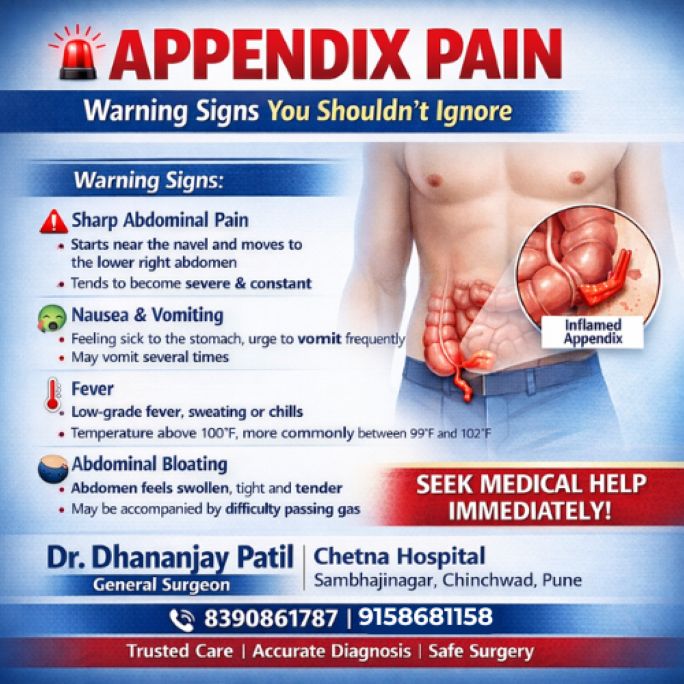
1. Sharp Abdominal Pain That Moves
One of the earliest signs of appendicitis is pain that:
- Starts near the navel
- Gradually shifts to the lower right abdomen
- Becomes sharp, constant, and severe
This pain worsens with walking, coughing, or sudden movements. If you experience this pattern, consult a general surgeon in Chinchwad or Pimpri immediately.
2. Nausea and Vomiting
Many patients with appendicitis experience:
- Loss of appetite
- Nausea shortly after abdominal pain begins
- Repeated vomiting
Unlike food poisoning, vomiting due to appendicitis does not relieve the pain.
3. Low-Grade Fever
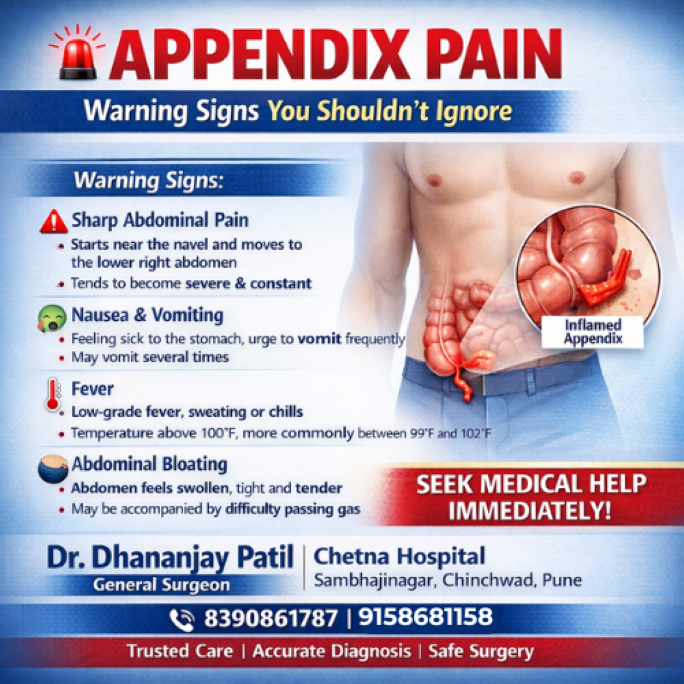
Appendix inflammation often causes:- Mild to moderate fever (99°F–102°F)Fever that worsens as the condition progresses Chills or sweating
4. Abdominal Bloating and Tenderness
Patients may notice:
- Swelling or bloating of the abdomen
- Extreme tenderness when pressing the lower right side
- Pain when releasing pressure (rebound tenderness)
These are classic signs that doctors look for during a physical examination.
5. Changes in Bowel Habits
Appendicitis can cause:
- Constipation or diarrhea
- Difficulty passing gas
- Feeling of abdominal fullness
These symptoms combined with pain should never be ignored.
6. Pain in Children, Elderly, and Pregnant Women
Appendicitis symptoms may be atypical in:
- Children (diffuse pain, irritability)
- Elderly patients (mild pain, delayed fever)
- Pregnant women (pain may shift upward)
In such cases, early evaluation by an experienced general surgeon like Dr. Dhananjay Patil is especially important.
Why Ignoring Appendix Pain Is Dangerous
Ignoring appendix pain can lead to serious complications such as:
✔ Ruptured Appendix
A burst appendix releases infection into the abdominal cavity, causing peritonitis, a life-threatening condition.
✔ Abscess Formation
Pus may collect around the appendix, requiring prolonged hospitalization and drainage.
✔ Sepsis
Severe infection can spread to the bloodstream, becoming fatal if untreated.
Early diagnosis and surgery significantly reduce these risks.
How Is Appendicitis Diagnosed?
At Chetna Hospital, Chinchwad, diagnosis involves:
- Detailed medical history and physical examination
- Blood tests to detect infection
- Ultrasound or CT scan of the abdomen
- Urine tests to rule out kidney stones or urinary infection
Accurate diagnosis is key to deciding the right treatment plan.
Treatment for Appendix Pain
1. Appendectomy (Appendix Surgery)
The most effective treatment for appendicitis is surgical removal of the appendix, known as an appendectomy.
Types of surgery include:
- Laparoscopic appendectomy (minimally invasive)
- Open appendectomy (for complicated cases)
Dr. Dhananjay Patil, a skilled general surgeon in Pune, performs safe and effective appendix surgeries with excellent outcomes.
2. Post-Surgery Recovery
- Hospital stay is usually short
- Faster recovery with laparoscopic surgery
- Patients can resume normal activities within a few weeks
Proper post-operative care is provided at Chetna Hospital.
When Should You See a General Surgeon Immediately?
Seek urgent medical care if you experience:
- Severe abdominal pain lasting more than 6 hours
- Pain localized to the lower right abdomen
- Fever with vomiting and tenderness
- Sudden worsening of pain
If you are searching for a general surgeon near me in Chinchwad, Pimpri, or Pune, timely consultation can save your life.
Why Choose Chetna Hospital & Dr. Dhananjay Patil?
- Experienced General Surgeon in Pimpri-Chinchwad
- Accurate diagnosis and ethical medical care
- Advanced surgical techniques
- Patient-centered approach
- Easily accessible from Chinchwad, Pimpri, Akurdi, Nigdi, Wakad, and nearby Pune areas
Chetna Hospital is known for trusted surgical care and prompt emergency management.