
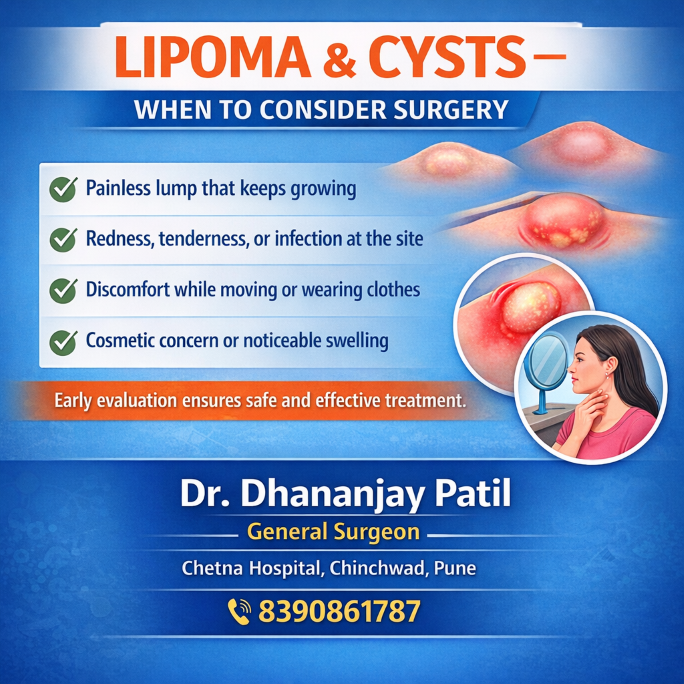
Lipomas and cysts are common soft tissue swellings that can appear anywhere on the body. While many people may ignore them because they are painless or slow-growing, it is important to understand when surgical intervention becomes necessary. Early diagnosis and treatment by a qualified general surgeon can prevent complications, discomfort, and cosmetic concerns.
In this blog, we will explore the types, causes, symptoms, diagnosis, and surgical treatment options for lipomas and cysts, with expert insights from Dr. Dhananjay Patil, General Surgeon at Chetna Hospital, Chinchwad, Pune.
What Are Lipomas and Cysts?
Lipomas
A lipoma is a benign (non-cancerous) tumor composed of fat cells that forms under the skin. They are usually soft, movable, and painless. Lipomas most commonly appear on the:
- Neck
- Shoulders
- Back
- Arms
- Thighs
Lipomas grow slowly and can range from a few millimeters to several centimeters in size. While lipomas are generally harmless, they may require surgery if they grow large, cause pain, or affect mobility.
Cysts
Cysts are fluid-filled sacs that can develop in any part of the body, often under the skin. There are several types of cysts, including:
- Epidermoid cysts – common under the skin, usually filled with keratin
- Sebaceous cysts – arise from blocked sebaceous glands
- Pilonidal cysts – near the tailbone, often infected
- Ganglion cysts – usually near joints
Cysts can be painless, but they may become red, tender, or infected, requiring medical or surgical treatment.
Causes of Lipomas and Cysts
Causes of Lipomas
- Genetics: Family history can increase susceptibility
- Age: Most lipomas appear in adults between 40–60 years
- Minor trauma: Some lipomas appear after a minor injury
Causes of Cysts
- Blocked sebaceous or sweat glands
- Infections
- Trauma or injury
- Chronic inflammation
While both lipomas and cysts are usually benign, it is important to monitor changes in size, color, or texture.
Symptoms That Require Attention
You should consider consulting a surgeon if you notice:
- A lump that keeps growing
- Pain, tenderness, or redness at the site
- Discharge or foul odor from a cyst
- Swelling that affects movement or comfort
- Cosmetic concerns due to visible lumps
Dr. Dhananjay Patil, General Surgeon at Chetna Hospital, Chinchwad, Pune, emphasizes that early evaluation helps prevent complications and ensures safer surgical outcomes.
Diagnosis – How Surgeons Assess Lipomas and Cysts
Accurate diagnosis is crucial to determine the need for surgery. A general surgeon usually conducts:
- Physical Examination
Assess the size, location, and mobility of the lump. - Imaging Tests
- Ultrasound – helps differentiate cysts from solid lumps
- MRI/CT scan – in case of deeper or complex lumps
- Fine Needle Aspiration (FNA) or Biopsy
- To rule out malignancy in rare cases
- Helps in planning surgical removal
- Blood Tests
- To check for infection or inflammation, if suspected
When Is Surgery Needed?
Not all lipomas or cysts require surgery. Many small, painless lumps can be observed over time. However, surgery becomes necessary in the following scenarios:
1. Rapid Growth
A lump that grows quickly or changes shape may need surgical removal to rule out malignancy.
2. Pain or Discomfort
Lipomas or cysts that press on nerves or muscles can cause pain, tenderness, or mobility issues.
3. Infection or Inflammation
Cysts that become infected, red, or produce pus need surgical drainage and removal.
4. Cosmetic Concerns
Visible lumps on the face, neck, or arms can affect self-esteem. Many patients choose removal for cosmetic reasons.
5. Recurrence
Recurrent cysts that keep coming back after conservative treatment may require definitive surgical removal.
Surgical Options for Lipomas and Cysts
Surgery for lipomas and cysts is usually minor, outpatient, and safe. Options include:
1. Excision Surgery
- The most common method
- Entire lump is removed with minimal tissue disruption
- Ensures low recurrence
2. Minimal Invasive or Laser Techniques
- For superficial cysts and lipomas
- Less bleeding, faster healing, and minimal scarring
3. Drainage for Infected Cysts
- For cysts with abscess formation
- Incision and drainage followed by antibiotic therapy
Dr. Dhananjay Patil, with years of expertise in general and laparoscopic surgery, ensures precise removal with minimal discomfort and faster recovery for all patients at Chetna Hospital, Chinchwad, Pune.
Recovery and Post-Operative Care
Recovery after lipoma or cyst surgery is usually quick:
- Mild discomfort for 1–2 days
- Stitches removal after 7–10 days (if required)
- Minimal scarring, especially with modern techniques
- Avoid heavy lifting or strenuous activity for a few days
- Keep the area clean to prevent infection
- Follow-up with your surgeon to monitor healing
Early surgical intervention prevents complications like infection, pain, or recurrence.
Why Choose an Experienced Surgeon?
Expertise matters for safe and effective surgical outcomes. Choosing a skilled surgeon ensures:
- Accurate diagnosis and grading
- Precise, minimal-invasive excision
- Proper infection prevention
- Faster recovery
- Reduced recurrence
Patients in Chinchwad, Pimpri, Pune, Wakad, Thergaon, and surrounding areas trust Dr. Dhananjay Patil for surgical care due to his extensive experience and compassionate approach.
Preventive Tips and Awareness
While lipomas cannot always be prevented, some cysts can be minimized with lifestyle care:
- Maintain good hygiene
- Avoid repeated trauma to the skin
- Use antiseptic care for minor injuries
- Maintain a balanced diet and healthy weight
- Regular medical check-ups for early detection
Consultation at Chetna Hospital, Chinchwad, Pune
At Chetna Hospital, patients benefit from:
- State-of-the-art surgical facilities
- Expert evaluation by Dr. Dhananjay Patil, General Surgeon
- Safe, modern surgical techniques
- Personalized care and follow-up
📍 Address: Chetna Hospital, Chinchwad, Pune
📞 Contact: 8390861787
Early consultation ensures safe removal of lipomas and cysts and prevents long-term complications.
Conclusion
Lipomas and cysts are usually benign, but timely evaluation and surgical removal are important when lumps grow, become painful, infected, or affect daily life. Modern surgical techniques, including minimally invasive and laser-assisted procedures, make treatment safe, quick, and effective.
If you notice any persistent lumps, swelling, or discomfort, don’t wait. Consult Dr. Dhananjay Patil, General Surgeon at Chetna Hospital, Chinchwad, Pune. Early intervention guarantees faster recovery, minimal scarring, and peace of mind.
Take charge of your health today—because small lumps can have big implications if ignored.