Experiencing nausea, vomiting, or fever may seem common, but persistent symptoms can indicate serious underlying medical conditions requiring prompt surgical care. Many patients in Chinchwad, Wakad, Thergaon, and surrounding areas often wonder: When should I consult a surgeon? Dr. Dhananjay Patil, General Surgeon at Chetna Hospital, Chinchwad, provides expert guidance and treatment for patients with such symptoms.
Understanding the Symptoms
1. Nausea
Nausea is a sensation of discomfort or unease in the stomach, often preceding vomiting. While occasional nausea may result from dietary indiscretion, motion sickness, or mild infections, persistent or severe nausea can indicate serious problems, including:
- Appendicitis – inflammation of the appendix
- Gallbladder disorders – such as gallstones or cholecystitis
- Digestive tract infections – bacterial or viral infections
- Bowel obstruction – a potentially life-threatening condition
2. Vomiting
Vomiting is the forceful expulsion of stomach contents through the mouth. While sometimes linked to mild illnesses, frequent or severe vomiting can be a warning sign of a surgical emergency. Causes may include:
- Appendicitis or ruptured appendix
- Severe gastroenteritis
- Bowel obstruction or intestinal blockage
- Pancreatitis or gallbladder problems
- Complications from hernias
3. Fever
Fever is the body’s natural response to infection or inflammation. High-grade or persistent fever, especially when accompanied by nausea, vomiting, or abdominal pain, may indicate serious infections requiring surgical intervention.
Common surgical causes of fever include:
- Appendicitis
- Gallbladder infections
- Infected hernias or abdominal abscesses
- Post-surgical infections (in case of previous surgeries)
When to See a Surgeon
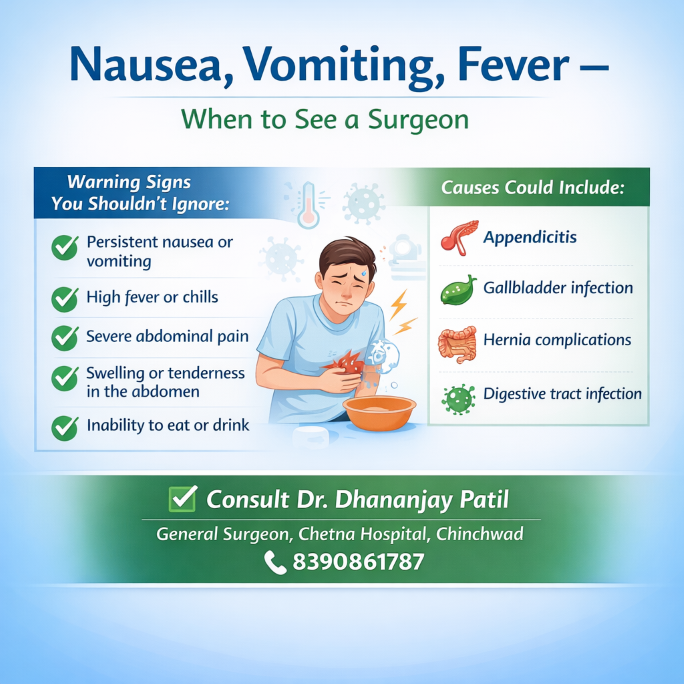
Persistent nausea, vomiting, and fever should never be ignored, especially if accompanied by the following warning signs:
- Severe abdominal pain, particularly in the lower right quadrant (possible appendicitis)
- Abdominal swelling or tenderness
- Inability to eat or drink for more than a few hours
- High-grade fever with chills
- Blood in vomit or stool
- Sudden worsening of symptoms
Consulting a trusted general surgeon near you promptly can prevent complications, such as ruptured appendix, sepsis, or bowel obstruction, which may require emergency surgery.
Common Conditions Requiring Surgical Consultation
1. Appendicitis
Appendicitis occurs when the appendix becomes inflamed and infected. Typical signs include lower right abdominal pain, nausea, vomiting, and fever. Without timely intervention, a ruptured appendix can lead to life-threatening complications. Appendectomy, either laparoscopic or open, is the standard treatment.
2. Gallbladder Disorders
Conditions like gallstones or cholecystitis can cause nausea, vomiting, and fever, often after meals. Laparoscopic cholecystectomy is a minimally invasive surgery performed to remove the gallbladder safely, with a quick recovery and minimal scarring.
3. Hernia Complications
Hernias, particularly incarcerated or strangulated hernias, can lead to vomiting, abdominal swelling, and severe pain. Emergency hernia repair is critical to prevent tissue death and other complications.
4. Digestive Tract Infections or Obstruction
Severe bacterial infections, bowel obstruction, or perforation of the intestines may present with persistent nausea, vomiting, abdominal pain, and fever. Surgical intervention is often required to remove obstructions or repair perforations.
Diagnosis and Evaluation
When you consult a general surgeon like Dr. Dhananjay Patil at Chetna Hospital, Chinchwad, the evaluation typically includes:
- Detailed medical history and symptom assessment
- Physical examination, focusing on the abdomen
- Blood tests to detect infection or inflammation
- Imaging studies like ultrasound, X-ray, or CT scan
- Endoscopic evaluation if needed
Prompt diagnosis ensures early intervention and minimizes risks.
Treatment Options
Depending on the underlying cause, treatment may include:
1. Surgical Intervention
- Appendectomy – removal of the inflamed appendix
- Laparoscopic gallbladder surgery – minimally invasive removal of gallstones
- Hernia repair surgery – either open or laparoscopic approach
- Emergency abdominal surgeries – for bowel obstruction, perforation, or abscess
2. Supportive Care
- Intravenous fluids for dehydration
- Medications to manage pain, nausea, and fever
- Antibiotics to control infections
3. Post-Operative Care
Recovery after surgery is equally important. Patients are advised to:
- Follow a light diet initially
- Avoid strenuous activity for a few weeks
- Attend follow-up appointments for monitoring
- Watch for any signs of infection or complications
Prevention and Early Detection
While some causes of nausea, vomiting, and fever cannot be prevented, early recognition of warning signs can save lives. Steps to maintain digestive and abdominal health include:
- Healthy diet rich in fiber and low in processed foods
- Regular exercise to maintain abdominal muscle strength
- Prompt consultation with a general surgeon for persistent symptoms
- Routine check-ups to detect underlying conditions early
Why Choose Dr. Dhananjay Patil, General Surgeon?
- Experienced Surgeon: Years of expertise in appendix, hernia, gallbladder, and abdominal surgeries
- Minimally Invasive Techniques: Proficient in laparoscopic and endoscopic procedures
- Patient-Focused Care: Compassionate approach prioritizing patient comfort and safety
- Modern Facilities: Fully equipped operating rooms at Chetna Hospital, Chinchwad
- Accessible Location: Serving patients from Wakad, Thergaon, Chinchwad, Ravet, Kiwale, Punawale, Chikhali, Bhosari, Moshi, Nigdi, Akurdi, Tathawade, Sangvi, Rahatani, and Dapodi
Areas Served
Patients from Pimpri-Chinchwad, PCMC, and Pune can easily access expert surgical care from Dr. Dhananjay Patil at Chetna Hospital, Chinchwad. Early consultation is key for conditions presenting with nausea, vomiting, and fever.
When to Seek Immediate Help
Seek urgent medical attention if you experience:
- Severe abdominal pain with nausea and vomiting
- High fever with chills
- Blood in vomit or stool
- Inability to eat, drink, or pass stools
- Swelling or tenderness in the abdomen
Immediate intervention can prevent complications and ensure safe, timely recovery.
Book an Appointment
Persistent nausea, vomiting, and fever are not symptoms to ignore. Consult Dr. Dhananjay Patil, General Surgeon, at Chetna Hospital, Chinchwad, for expert evaluation, accurate diagnosis, and advanced surgical care.
📞 Contact: 8390861787
✅ Safe, compassionate, and patient-focused surgical care near you